

Abdulwhab Shremo Msdi, PharmD, offers insights on its complexities, why institutions have been slower to include this dosing technique, and why clinicians need to consider this approach.
John Parkinson is the assistant managing editor for Contagion. Prior to joining MJH Life Sciences in 2020, he has covered a variety of fields and markets including diabetes, oncology, ophthalmology, IT, travel, and local news. You can email him at jparkinson@mjhlifesciences.com.
Abdulwhab Shremo Msdi, PharmD, offers insights on its complexities, why institutions have been slower to include this dosing technique, and why clinicians need to consider this approach.

Invivyd announced its product, pemivibart (Pemgarda), has continued to show consistent neutralization for almost 3 years, with no meaningful change to activity.

A survey of this population showed that over a 2 and ½ year period, there was a decrease in post-acute sequelae of SARS-CoV-2 infection (PASC). However, 1% of respondents said they are still dealing with restrictions in their lives.

In a retrospective cohort study, a health system found this form of prophylaxis led to substantial reductions in 2 of 3 sexually transmitted infections (STIs) in a mostly male population.

The Louisiana Department of Health announced the news late yesterday, and it is the first death in the US associated with the H5N1 virus.

A novel approach may identify resistance earlier and get patients on a proper course of antifungals sooner.

Older males who had these infections had a statistically significant higher risk for physical and cognitive impairments.

Over a third of respondents in 6 African countries were hesitant to get the vaccine themselves. And for parents, nearly 40% were reluctant to get their children immunized.

The federal health agency stresses the importance of finding the balance between vigilance and enjoying normal activities.

Just 60% received detectable antibodies for 2 FDA-approved vaccines, possibly pointing out a need for additional doses to reach protective levels against disease.

Data detailing antibiotic choice and duration derived from electronic health records improved appropriate therapy use for community-acquired pneumonia.
Sequencing shows differing virus in the hospitalized patient in Louisiana, which the federal agency says is concerning.

Investigators at the University of Virginia are examining the potential link between the “sympathetic” nervous system and the role of the seriousness of the infection.
This week the panel weighs in on monoclonal antibodies in this patient population as well as important overall takeaways about COVID-19 therapies.

During its 2 phase 3 clinical trials, the twice-yearly prophylaxis injection was found to be highly efficacious in preventing infection.
Resistance is expected to worsen significantly, but can a combination of both ground-level clinician stewardship actions as well as systemic reforms such as the Pasteur Act at least slow down the train?
In this week's episode, the panel weighs in on treatments not specifically indicated for COVID-19 treatment, including metformin, and concerns around using medications in this way.

A study found deploying peers with lived experience in illicit drug use increased the rate of people diagnosed, treated, and cured of the disease.

The PDUFA date is set for early June, and if approved, it would be the first and only single dose immunization for infants regardless of weight designed to protect them for the duration of their first RSV season.
In this week's episode, the panel discusses therapies and care involving inpatients, including mechanical ventilation, extracorporeal membrane oxygenation (ECMO), and remdesivir.

Jeanne Marrazzo, MD, MPH, director of NIAID, discusses the mutation changes needed to make human-to-human transmission easier as well as infection prevention strategies.
The federal agency stated there were cases of RSV lower respiratory tract infection (LRTI) post-immunization for 2 of the company’s vaccines, mRNA-1345 and mRNA-1365.
The MeMed Severity test can determine results within 15 minutes through a blood test and aims to offer treatment guidance with machine learning.
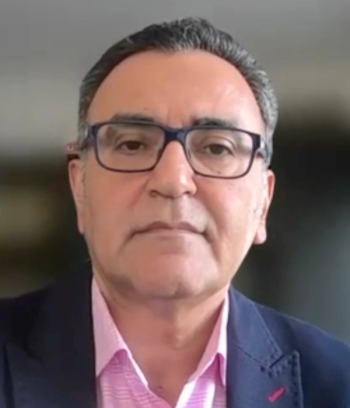
A small phase 2 study evaluated Debiopharm’s investigational antibiotic, afabicin, including its clinical response rate and safety profile of 2-3 weeks of treatment for staphylococcal bone and joint infections (BJI).

With some young people still feeling the lingering effects of Long COVID years later, new data shows the value of COVID-19 vaccination to prevent the condition altogether.
In our latest roundtable series, we discuss COVID-19 treatment management and prevention 4 years after the start of the pandemic.

The 2 companies will examine molnupiravir (Lagevrio) using a different formulation that is not approved in any country globally.

A small study shows that 68% of these patients were given this class of medication, which highlights a disconnect between treatment guidelines and clinical practice.
The combination therapy’s developer, Atea Pharmaceuticals, is looking to initiate a phase 3 study in early 2025.

Jacinda Abdul-Mutakabbir, PharmD, MPH, AAHIVP, discusses her work on the Equity in Antimicrobial Stewardship Efforts (EASE) framework, including progress for it, and how other institutions or providers can implement it.