































































































































Investigators from the NIH have launched a phase 1 clinical trial to assess if a topical cream administered prior to H5N1 vaccination can enhance immune response.
Investigators from the NIH have launched a phase 1 clinical trial to assess if a topical cream administered prior to H5N1 vaccination can enhance immune response.

Troy Trygstad, PharmD, MBA, PhD, discusses the trends of targeted research in the influenza vaccination space and how protocols could differ based off of variances.

New research finds that the flu vaccine is more successful in women than in men, but the complexity of the issue makes it difficult to know exactly why that is.

Stay up-to-date on the latest infectious disease news by checking out our top 5 articles of the week.

A new study by St. Jude Children’s Research Hospital reported that gamma delta (γδ) T cells play a key role in protecting infants from flu complications.

A universal flu vaccine candidate elicits protective response in mice against multiple strains of the virus.

In a wounded mouse model concurrently infected with influenza A, investigators observed that the innate immune system prioritized responding to the lung infection, delaying wound healing.

New recommendations from the CDC's Advisory Committee on Immunization Practices reveal that health care providers have the intranasally-administered live attenuated influenza vaccine (LAIV) among their arsenal of available vaccines for the 2018-2019 flu season.
Investigators report that the duration of viral shedding of influenza A in obese adults was 42% longer than nonobese adults.
With vaccine efficacy during the 2017–2018 flu season under question, a novel antiviral agent may provide a solution.
A new study reports that PrEP users were more likely to receive more primary health care services compared with non-PrEP users.

Genentech has announced that baloxavir marboxil met primary objective in the phase 3 CAPSTONE-2 study for individuals with a high risk of complications from influenza.

New data indicate that urgent care centers prescribed antibiotics for 45.7% patients with respiratory infections associated with inappropriate antibiotic prescribing.

CDC researchers say that some influenza respiratory infections may be originating in the eye, and thus, more research is needed pertaining to ocular transmission.

Doctors are prescribing antibiotics too often for viral acute respiratory infections.

Experts continue to recommend that people get the seasonal flu vaccine as the scientific community works toward a universal vaccine offering lifelong protection against multiple strains.

The FDA has accepted an NDA and granted Priority Review for Genentech’s baloxavir marboxil for the treatment of acute, uncomplicated influenza in individuals aged 12 and older.

Researchers from the Chang-Gung Memorial Hospital find that half of influenza cases in patients admitted to the ICU received a false-negative rapid influenza antigen test.
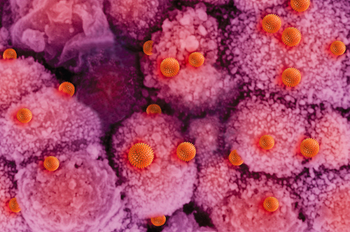
Anne Schuchat, MD, provides some history and insights on CDC’s role in safeguarding public health when the microbial world collides with the human world.

Stay up-to-date on the latest infectious disease news by checking out our top 5 articles of the week.
What makes a germ more likely to cause a pandemic? A new report poses a novel framework for addressing this question.
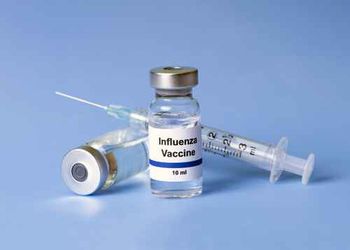
The overall rate of health care personnel receiving flu shots has gone up in recent years, but a new study finds that much of the increase is due to policies held at non-VA hospitals.
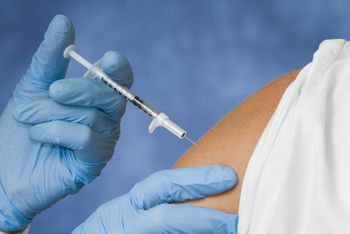
With optimal distribution, even low-efficacy flu vaccines can make a difference, although their benefits vary somewhat depending on which age group has a high uptake rate.

In case you missed them, we've compiled the top 5 articles from this past week.
A phase 2 trial of an experimental universal flu vaccine is moving forward with sponsorship from The National Institute of Allergy and Infectious Diseases.