

































































































































Richard Krieger, MD, chairman of the Infection Control Committee at Chilton Medical Center, and infectious disease physician at ID care, explains how clinicians should manage patients with so-called “chronic Lyme disease.”
Richard Krieger, MD, chairman of the Infection Control Committee at Chilton Medical Center, and infectious disease physician at ID care, explains how clinicians should manage patients with so-called “chronic Lyme disease.”

Stephen Redd, MD (RADM, USPHS), Director of the Office of Public Health Preparedness and Response (OPHPR) at the Centers for Disease Control and Prevention (CDC), discusses whether or not there are differences between US-acquired Zika and non-US acquired Zika virus cases.

Richard Krieger, MD, chairman of the Infection Control Committee at Chilton Medical Center, and infectious disease physician at ID care, discusses tests used to diagnose Lyme disease and the potential consequences of misdiagnosis.

Researchers have now identified virologic evidence of Zika virus in patients with Guillain-Barré syndrome, showing that the onset of the neurologic disorder can parallel the onset of systemic manifestations of the mosquito-borne infection.

Stephen Redd, MD (RADM, USPHS), Director of the Office of Public Health Preparedness and Response (OPHPR) at the Centers for Disease Control and Prevention (CDC), gives a brief overview of Zika Virus.

Thanks to the recently approved $1.1 billion in federal funding to support Zika virus-related efforts, various government agencies are ramping up efforts to develop novel vaccines designed to prevent infection.

Richard Krieger, MD, chairman of the Infection Control Committee at Chilton Medical Center, and infectious disease physician at ID care, provides a brief overview of Lyme disease.

The Centers for Disease Control and Prevention (CDC) has updated its interim guidance for “pre-pregnancy counseling” for Zika virus, just as new information regarding sexual transmission of the infection has been made available.

Stephen Redd, MD (RADM, USPHS), Director of the Office of Public Health Preparedness and Response (OPHPR) at the Centers for Disease Control and Prevention (CDC), explains how the Zika virus spread to the United States.

Richard Krieger, MD, chairman of the Infection Control Committee at Chilton Medical Center, and infectious disease physician at ID care, discusses how clinicians go about diagnosing Lyme disease.

Just when residents in the Miami area thought the need to fear mosquito-borne viruses was over, Florida health officials revealed that they have identified a locally-transmitted case of Dengue virus.

Pedro Fernando da Costa Vasconcelos, MD, PhD, director of WHO Collaborating Center for Arbovirus and Research, Evandro Chagas Institute, discusses the prognosis of babies with Zika-related complications.

Researchers at Stanford University School of Medicine have potentially added to existing knowledge with regard to how Zika virus affects the developing fetal brain.

Congressional leaders brokered a compromise Wednesday that keeps the government running, provides financial relief to the beleaguered city of Flint, Michigan, and finally funds Zika prevention efforts.

Babies born to mothers infected with the Zika during pregnancy may have the virus in their systems for more than 2 months after birth.

Despite the ongoing funding stalemate in Congress, several research initiatives hoping to yield an effective vaccine against Zika are advancing through the development process.

Pedro Fernando da Costa Vasconcelos, MD, PhD, director of WHO Collaborating Center for Arbovirus and Research, Evandro Chagas Institute, discusses whether or not all Zika-infected pregnant women will infect their fetuses.

After plaguing much of Brazil and the Caribbean since late 2014, the Zika virus “crisis”—such as it is—seems to have migrated eastward—far eastward.
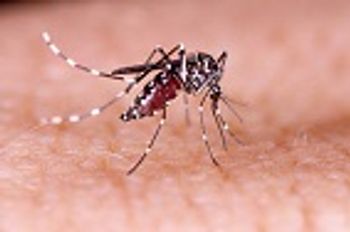
Researchers at Central Michigan University have found that proteins in the saliva of Aedes aegypti mosquitoes bind to Dengue virus and inhibit disease transmission to human cells and mice.

Researchers are gathering more evidence of the exact effects of Zika virus infection on eye health.

Pedro Fernando da Costa Vasconcelos, MD, PhD, director of WHO Collaborating Center for Arbovirus and Research, Evandro Chagas Institute, discusses the likelihood that fetuses congenitally infected with the Zika virus will develop related complications, such as microcephaly.

John D'Angelo, MD, senior vice president, executive director Emergency Medicine Services at Northwell Health, discusses how hospitals use updates from the Department of Health to remain aware of any potential outbreaks.

With so much of the world focusing on Zika virus in the Americas and Southeast Asia, it’s easy to forget that there are other mosquito-borne viruses causing serious public health problems globally—namely, Dengue fever and Chikungunya.

Pedro Fernando da Costa Vasconcelos, MD, PhD, director of WHO Collaborating Center for Arbovirus and Research, Evandro Chagas Institute, discusses the possibility of the Zika virus evolving to cause other complications in the future.

With more than 90 locally transmitted cases of Zika virus infection confirmed in Florida, and states from the southeast to the Midwest fearing similar outbreaks, the Centers for Disease Control and Prevention (CDC) has made bolstering its network of approved testing laboratories for the virus a priority.