|Articles|September 21, 2016

Rutgers & Columbia Researchers Discover New Strain of Multi-drug Resistant E. coli

Author(s)Einav Keet

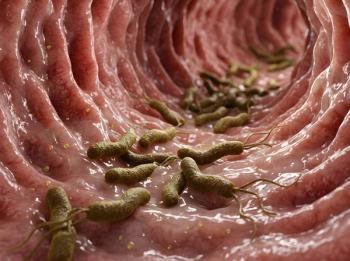
A team of scientists from Rutgers University and Columbia University recently discovered a new strain of Escherichia coli (E. coli) believed to be the first in the United States with resistance to two kinds of antibiotics considered to be last resort weapons to prevent dangerous infections.

Around the world, researchers studying antibiotic-resistant bacteria are working to understand these pathogens as quickly as the germs are adapting. In that effort, a team of scientists recently discovered a new strain of Escherichia coli (E. coli) believed to be the first in the United States with resistance to two kinds of antibiotics considered to be last resort weapons to prevent dangerous infections.

In their research paper, published in The American Society for Microbiology’s journal, mBio, the group of Rutgers University and Columbia University researchers detail the case of an E. coli strain found in samples taken from a 76-year-old male hospital patient in 2014. The authors explain prior findings on a plasmid-borne colistin resistance gene called mcr-1, which scientists had previously discovered in samples in China and other parts of the world, but which had never appeared in the United States. Of concern to researchers has been the potential discovery of mcr-1 appearing in US samples, as well as the spread of the gene into Enterobacteriaceae with the carbapenem-resistance gene blaNDM-5. In this case, say the authors, they’ve discovered the occurrence of both in a strain of E. coli approaching pan-resistance.

In an exclusive interview with Contagion, study author Barry Kreiswirth, PhD, of the Public Health Research Institute Center at Rutgers University, discussed the significance of these new findings.

Urine cultures obtained from the patient’s sample showed the presence of multiple bacteria such as Pseudomonas aeruginosa, Citrobacter koseri, Enterococcus faecium, P. aeruginosa, Klebsiella pneumoniae, Enterococcus spp., methicillin-resistant Staphylococcus aureus, and E. coli. After conducting drug susceptibility tests on the isolated strains, the researchers discovered that the E. coli isolate present in the sample exhibited resistance to colistin as well as all beta lactams, including carbapenems.

With the rise of carbapenem-resistant bacteria, colistin has increasingly become an antibiotic considered the last line of defense for hard-to-treat infections. According to the Centers for Disease Control and Prevention, at least 2 million people in the United States become infected with antibiotic-resistant bacteria and 23,000 die as a result each year. Bacteria can form antibiotic resistance—and dangerous infections can occur in people–through exposure to antimicrobial agents. The drugs used to fight the bacteria may destroy certain germs, but some microbes are naturally stronger and more resilient and can resist the effects of the drugs. Once the antibiotics kill off much of the pathogenic bacteria, as well as the beneficial microflora present in our bodies, those drug-resistant bacteria unharmed by the treatment can then grow and take over. That resistance can then spread to other bacteria.

In this case detailed in the new study, while the mcr-1- and blaNDM-5-harboring E. coli was resistant to both carbapenem and colistin, the isolate did show susceptibility to the antibiotics aztreonam, amikacin, gentamicin, nitrofurantoin, tigecycline, and trimethoprim-sulfamethoxazole.

“The mcr-1 gene that we found in our strain has also been found in other strains throughout the United States,” said Dr. Kreiswirth during the interview with Contagion, explaining that isolates containing mcr-1 have been found in pig and bovine samples. He noted that it wasn’t unforeseen to find the colistin-resistance gene in animal reservoirs as the antibiotic has been used in cattle and pig feedlots. “The surprise wasn’t that we found it in a human; the surprise was that we found it in association with a second resistance gene, which was the carbapenem-resistance gene. That’s the new finding.”

As Dr. Kreiswirth and his team continue to study mcr-1 in the United States, he pointed out a recent study on the finding of a second colistin-resistance gene dubbed mcr-2, and the possibility that other still-unidentified resistance genes are out there.

More of the interview with Dr. Kreiswirth is available here:

What's Surprising About the Discovery of MCR1_NJ?

Developing New Antibiotics Can Control 'Superbug' Outbreaks

What Makes a 'True' Superbug?

How Can We Fight the Spread of Antibiotic Resistance?

Challenges of Obtaining FDA Approval for Novel Agents

Who is Most Vulnerable to Antibiotic-Resistant Organisms?


Related to this article

This Week's Top 5 Infectious Disease News Stories: September 12-September 18, 2026
In this week's top infectious disease stories, a Pennsylvania teen became the state's fourth measles death in weeks, the CDC reported a 17% summer surge in rabies exposure calls, new research revisited whether cefepime raises mortality risk, a multihospital review examined ceftriaxone's safety after state alerts, and examining Legionella pneumonia diagnostics.
Ceftriaxone Safety: Separating Signal From Risk
A retrospective multihospital study found that severe adverse events occurred at similarly low rates with ceftriaxone and other IV cephalosporins suggesting there is no evidence to support avoiding ceftriaxone despite recent health department safety alerts.
Treatment of Latent Tuberculosis in a Trice
A retrospective study of 225 patients across Cook County Department of Health clinics found that the novel 1-month 1HP regimen (isoniazid plus rifapentine) for latent TB infection had a completion rate comparable to standard longer regimens and was well tolerated, suggesting it may be a viable shorter alternative.
Drawing Borders Around a Borderless Specialty
Editor in chief Jason Gallagher, PharmD, FCCP, FIDP, FIDSA, BCPS, discusses the proposed OMB rule restricting federal grants for international research collaboration, and how it threatens infectious disease medicine's inherently borderless surveillance networks, publication access, and knowledge-sharing systems.
Beyond Approval: Finding the Right Place for Emerging Gram-Negative Antibiotics
The expanding gram-negative antibiotic pipeline offers important new treatment options; however, FDA approval alone does not define a drug’s place in therapy. Clinicians must weigh the clinical problems that each agent solves, the strength of the evidence behind it, and what remains unknown before incorporating these therapies into routine practice.