

Conference Coverage
about 15 hours ago
Novel RSV Therapy: Addressing a Clinical NeedLatest Content
Oct 26, 2026 | News
Novel RSV Therapy: Addressing a Clinical Need

Early Dual Therapy Shortens Staphylococcus aureus Bacteremia in SABEDTIO Trial
Oct 26, 2026
Pfizer 25-Valent Pneumococcal Vaccine Boosts Serotype 3 Response in Infants
Oct 25, 2026
Ebola Update: DRC Outbreak Reaches 9735 Cases, Second Largest on Record
Oct 25, 2026
Early Antibiotic Stop in Neutropenic Fever Did Not Raise Severe Events
Oct 24, 2026









Advertisement
Shorts

1:25
Why RSV Vaccine Recommendations Are More Complex Than Flu Shots
20 hours ago
by
Robert H. Hopkins Jr. MD(+1 more)
0:35
Do the New Hepatitis B Birth Dose Guidelines Miss Horizontal Transmission?
2 days ago
by
Karen B. Jacobson, MD, MPH(+1 more)
0:32
Why Preserving Amikacin and Macrolide Susceptibility Matters in MAC Lung Disease
2 days ago
by
Kevin Winthrop, MD(+1 more)
1:11
Hepatitis B’s Hidden Household Risk for Infants
3 days ago
by
Karen B. Jacobson, MD, MPH(+1 more)
0:52
Should You Test MAC Isolates for Susceptibility Every Time?
3 days ago
by
Kevin Winthrop, MD(+1 more)
0:33
Why the Hepatitis B Birth Dose Is the Most Feasible Protection
4 days ago
by
Karen B. Jacobson, MD, MPH(+1 more)
0:36
Why ENCORE Tested Inhaled Amikacin From the Start of MAC Treatment
4 days ago
by
Kevin Winthrop, MD(+1 more)
1:32
Why People Put Off Vaccines—and How to Help Them Act
4 days ago
by
Robert H. Hopkins Jr. MD(+1 more)
0:57
Antibiogram Use at the Bedside
12 days ago
by
Zachary Nelson, PharmD, MPH, BCIDP(+1 more)
1:06
Utilizing the New UTI Classifications
15 days ago
by
Zachary Nelson, PharmD, MPH, BCIDP(+1 more)
Contagion: Summer 2025 Issue
View our interactive Summer 2025 issue, featuring articles on biosurveillance, aging in HIV, the NARROWS Framework for stewardship, and much more!
A Deep Dive: Understanding the Neurological Toll of Long COVID
Ravindra Ganesh, MD, MBBS, FACP, Dip ABOM, Svetlana Blitshteyn, MD, FAAN, and Monica Verduzco-Gutierrez, MD, discuss Long COVID's prevalence—noting that 1 in 5 Americans and 1 in 10 patients post-COVID may be affected.
Contribute to Contagion's Digital Book!
Contagion® is always looking for new contributors to the various sections of our book. Click to learn more about submitting.

Beyond the Virus: Long COVID’s Neurological Toll
There is increasing concern of Long COVID’s impact on the brain of patients previously infected with the virus. Featuring commentary from Jennifer Frontera, MD; Leigh Elkins Charvet, PhD; Neil Busis, MD; Alba Azola, MD; and Kristine Erlandson, MD.

COVID-19 Therapeutic Management and Prevention
Tina Tan, MD; Scott Roberts, MD; James Wilson, DO, FACP, FAWM, CTropMed; and Michael Curulewski, PharmD, BCPS, BCIDP, BCGP, discuss FDA-approved COVID-19 therapies, off-label treatments, and preventive modalities.





Videos








Contagion Digital Edition
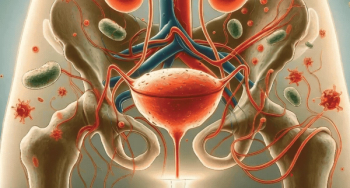
Recent urinary tract infection guideline updates from multiple international
medical societies highlight evolving recommendations, including a major shift
in classification, moving from anatomy- and risk factor–based definitions
toward distinguishing localized from systemic infections.

Widespread antimicrobial use disrupts vital microbial communities that regulate Earth’s biogeochemical cycles, driving antimicrobial resistance, worsening human and environmental health, and significantly contributing to climate change.

New data from the PETERPEN trial suggest that piperacillin-tazobactam may be noninferior to meropenem for early clinical outcomes in select patients with ESBL bloodstream infections, but carbapenems remain the standard of care until final mortality results are available and fully analyzed.

In mid-May, as the world was still grappling with an unexpected hantavirus outbreak aboard a tourism vessel, news broke of an Ebola outbreak in the Ituri Province of the Democratic Republic of the Congo spanning at least 3 health zones, including Bunia, Rwampara, and Mongbwalu.

Reported cases of Legionnaires’ disease have been on the rise for the past decade, and identifying Legionella bacteria requires specialized testing in the microbiology lab. Here is a clinical overview of Legionella bacteria, including required testing, treatment, and reporting to public health officials.

A retrospective multihospital study found that severe adverse events occurred at similarly low rates with ceftriaxone and other IV cephalosporins suggesting there is no evidence to support avoiding ceftriaxone despite recent health department safety alerts.

A retrospective study of 225 patients across Cook County Department of Health clinics found that the novel 1-month 1HP regimen (isoniazid plus rifapentine) for latent TB infection had a completion rate comparable to standard longer regimens and was well tolerated, suggesting it may be a viable shorter alternative.
Here is a review of glucagon-like peptide-1 receptor agonist use in people with HIV.

Editor in chief Jason Gallagher, PharmD, FCCP, FIDP, FIDSA, BCPS, discusses the proposed OMB rule restricting federal grants for international research collaboration, and how it threatens infectious disease medicine's inherently borderless surveillance networks, publication access, and knowledge-sharing systems.

Daptomycin-resistant Enterococcus faecium bacteremia is an emerging, high-mortality challenge in transplant and other high-risk patients, requiring early recognition, aggressive source control, and reliance on limited alternatives—most notably linezolid—with combination or salvage therapies considered when options are constrained.









































































































































All News
Advertisement
Advertisement
Investigational asuptegravir cut HIV-1 RNA by up to 2.36 log10 copies/mL in 10 days, and adding fostemsavir boosted CD4 gains in immunologic nonresponders.
In an ECOSPOR III analysis, all-cause hospitalization by week 4 fell to 3.4% with fecal microbiota spores vs 16.1% with placebo in recurrent C difficile infection.

CDC lists 5 active multistate outbreaks tied to oysters, raw milk cheese, sprouts, and pet turtles, with recalls in effect for 4 of them.

Exploratory SCORPIO-PEP data presented at IDWeek 2026 show household contacts with breakthrough COVID-19 on ensitrelvir had lower peak viral RNA and fewer severe symptoms than placebo recipients.

Day 42 all-cause mortality was 23.8% with oral olorofim vs 24.3% with AmBisome plus standard of care in invasive aspergillosis unsuited to azole therapy.
MBL producers rose from 20.4% to 48.6% of US carbapenem-resistant Enterobacterales from 2021 to 2025, while aztreonam-avibactam stayed active against 97.7% of them.
Switching to once-daily bictegravir/lenacapavir kept adverse event rates similar to comparators and metabolic markers stable across comorbidity groups in ARTISTRY-1 and -2.
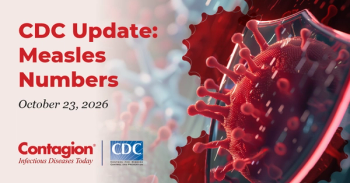
The latest CDC numbers show a 4.0% increase in measles cases from week-to-week, bringing the 2026 US total to 4588 confirmed cases. Ninety-six percent of cases are outbreak-associated.
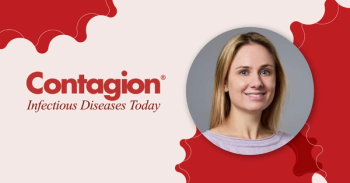
Karen B. Jacobson, MD, MPH, of Kaiser Permanente Northern California, presented data at IDWeek 2026 showing 58.2% of children younger than five years exposed to active hepatitis B in the home were exposed by someone other than their birth mother, a risk maternal screening alone would miss under the CDC’s revised birth dose recommendation.
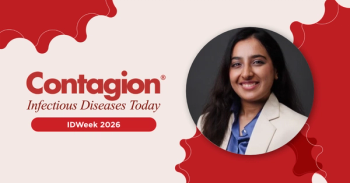
Isavuconazole had a lower liver adverse event signal than voriconazole and posaconazole, while olorofim, manogepix, and rezafungin held activity against resistant molds.
Advertisement

Data being presented at IDWeek 2026 show zoliflodacin maintains high gonorrhea cure rates in patients co-infected with chlamydia. David Altarac, MD, discusses the therapy and the study being presented at the conference.

In the phase 3b ENCORE trial, adding amikacin liposome inhalation suspension (ALIS) to azithromycin and ethambutol significantly improved culture conversion in newly diagnosed MAC lung disease, while treatment-emergent amikacin (2.2%) and macrolide (1.1%) resistance stayed rare. Kevin Winthrop, MD, provides insights around the study.
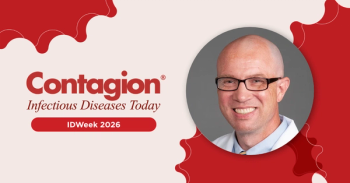
Oral pritelivir improved lesion healing and cut hospitalizations from 76% to 29.4% vs investigator's choice therapy in immunocompromised patients with refractory HSV.
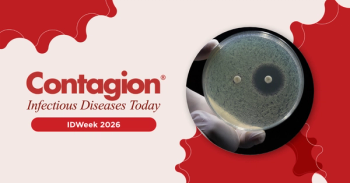
Investigational cefiderocol-xeruborbactam inhibited 98.5% of carbapenem-nonsusceptible Acinetobacter and nearly all Enterobacterales in global surveillance data.
Oral zelicapavir cut time to complete RSV symptom resolution by up to 1 week in high-risk adults, but it did not meet its primary end point in a phase 2 trial.
Advertisement

Advertisement
Trending on Contagion Live
1
Early Dual Therapy Shortens Staphylococcus aureus Bacteremia in SABEDTIO Trial
2
Ebola Update: DRC Outbreak Reaches 9735 Cases, Second Largest on Record
3
Pritelivir Cuts Hospital Days in Refractory HSV in Phase 3 PRIOH-1
4
Novel RSV Therapy: Addressing a Clinical Need
5