




Antimicrobial Stewardship
Latest News

Advertisement
Latest Videos









CME Content

























































































































Advertisement
More News

A CDC report links the rapid growth of NDM-CRE to testing gaps and urges the prompt use of carbapenemase testing, mechanism-guided therapy, and stronger infection prevention measures.
This week, OPAT for gram-negative infections expands to outpatients amid infusion complexity and stability limits, HHS and CDC add five ACIP members days before meeting, and more.
Eloise Williams, MBBS, BMedSci, MPHTM, FRACP, FRCPA, details how an 8-criterion genomics-plus-clinical framework narrowed 5,881 isolates to 5 strains while prioritizing safety and contemporary relevance.

Bordetella bronchiseptica is a rare human respiratory pathogen that can be initially confused for Bordetella pertussis, leading to potentially inadequate treatment. This article reviews the organism and recent literature on the successful treatment of B bronchiseptica.

Ryan Shields, PharmD, MS, discusses the challenges of incorporating newer antibiotics for gram-negative infections, how he is using broad-spectrum antimicrobial agents for these infections, and the factors he looks for in considering new agents.
Shin Hye Yoo, MD, PhD, on a nationwide cohort showing end-of-life antibiotic use clusters in the final months, is higher in hematologic cancers, and offers a window for stewardship and goal-concordant care.

Monica V. Mahoney, PharmD, BCPS, BCIDP, FCCP, FIDSA, FIDP, FMSHP, provides insights on the outpatient side of therapy, including treating outpatients for gram-negative infections.

Rodney E. Rohde, PhD, SV/SM/MB(ASCP)CM, FACSc, offers some insights on the latest diagnostics, susceptibility testing for newer antimicrobials, and how infectious disease clinicians and laboratory professionals can collaborate on challenging cases.
This week, US measles totals reached 1,454, a 750-plus-day SARS-CoV-2 infection in a person with HIV informed care, implementation science efforts advanced access, and a universal flu adjuvant showed promise.

In the second installment of an interview with Jacinda Abdul-Mutakabbir, PharmD, MPH, she continues the discussion around limited to no health care engagement due to these factors, and the importance of translating data from the bench to bedside when looking at disease and infection prevention.
Jacinda Abdul-Mutakabbir, PharmD, MPH, provides insights on her recently published study on this topic and how the 2 are connected.

41 cases of nongroupable N meningitidis conjunctivitis were identified at Joint Base San Antonio-Lackland, highlighting diagnostic, treatment, and surveillance implications for congregate living settings.
From COVID-19 antivirals to RSV, influenza, malaria, and gram-negative infections, new research highlights both advances and ongoing challenges in infectious disease prevention and treatment.
In the midst of many changes surrounding aminoglycosides over the past several years, clinicians may be left wondering if these agents still have a role in modern clinical practice. This article summarizes changes impacting aminoglycosides, discusses where these agents may still have a role in the context of gram-negative infections, and explores future areas of study.

Compared to culture/sensitivity results (C/S) results, ICU-based PCR testing of hospital-acquired pneumonia was associated with lower treatment costs and better antibiotic stewardship, but not higher cure rates.

Iterum Therapeutics has launched its sulopenem etzadroxil and probenecid (Orlynvah), which is the first and only oral penem antibiotic in the US.

Ciprofloxacin monotherapy was non-inferior to aminoglycoside/ciprofloxacin combination for bubonic plague in multi-year trial in endemic region.

A 9-month pilot study showed a 55% reduction in resident colonization with MRSA, VRE, and ESBL, but contamination of high-touch surfaces persisted in rooms of MDRO carriers.
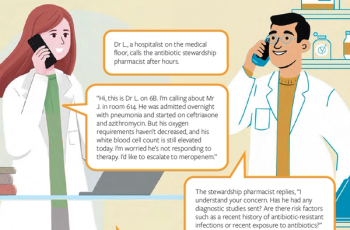
The NARROWS framework, developed within the IDSA Core Antimicrobial Stewardship Curriculum, provides a structured, behaviorally informed approach to communication that helps stewardship teams address the social, emotional, and cultural factors influencing prescribing decisions in order to optimize antimicrobial use and combat resistance.

Allegheny Health Network’s (AHN) Thomas Walsh, MD, talks about Allegheny General Hospital being recognized as an Infectious Diseases Society of America (IDSA) Center of Excellence and some of the stewardship strategies they are employing to reduce antimicrobial usage.

Stenotrophomonas maltophilia is an opportunistic, multidrug-resistant pathogen that poses significant treatment challenges due to its complex resistance mechanisms, limited therapeutic options, and high mortality rates among vulnerable patients.

Deeksha Jandhyala, MD, discusses how her team works to prevent infections and provide clinical assistance for transplant candidates.

Clinical trial and real-world data, including the PROVE study, support its role as an effective and carbapenem-sparing therapy for serious infections, though outcomes vary depending on pathogen and infection type.

Doxycycline postexposure prophylaxis is associated with emerging tetracycline resistance in Neisseria gonorrhoeae and commensal organisms, highlighting the need for cautious, targeted use.

A recent literature review describes the current state of artificial intelligence tools for guiding antimicrobial therapy. Are you ready for change?
Advertisement
Advertisement