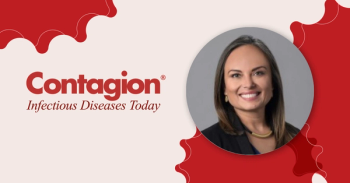
NYU’s Angelica Cifuentes Kottkamp, MD, continues our Media Day discussion around these illnesses and how in New York City, clinicians need to be prepared to decipher in differential diagnosis for these potential diseases.

NYU’s Angelica Cifuentes Kottkamp, MD, continues our Media Day discussion around these illnesses and how in New York City, clinicians need to be prepared to decipher in differential diagnosis for these potential diseases.

In episode 2 of our Media Day series with New York University (NYU), Angelica Cifuentes Kottkamp, MD, discusses its vaccine center and their work around COVID-19 vaccines, as well as the importance of achieving diversity in clinical trials.

Robert Hopkins, Jr, MD, medical director of the National Foundation for Infectious Diseases (NFID), discusses the changes around the new vaccine recommendations and what potential serious consequences may be seen as a result.

Joshua Rosenberg, MD, continues the discussion on the REVISIT study, which showed comparable—or lower—28-day mortality rates than meropenem/colistin despite treating a higher proportion of patients with metallo-β-lactamase–producing pathogens.

Angelica Cifuentes Kottkamp, MD, discusses how its location, breadth of experience, and opportunities afford clinicians the ability to see and treat a wide berth of diseases and infections.

Joshua Rosenberg, MD, discuses the differences in clinical trials that enroll both intra-abdominal infection patients and those with hospital- or ventilator-associated pneumonia face major complexity because these two groups differ widely in baseline severity, mortality risk, and expected treatment outcomes

A novel pairing of aztreonam and avibactam offers a long-needed solution to combat highly drug-resistant gram-negative bacteria, particularly those producing difficult-to-treat metallo-β-lactamases.

Shionogi has been identifying in vitro activity using its antibiotic, cefiderocol, against Gram-negative clinical isolates such as carbapenem-resistant Enterobacterales (CRE). Christine Slover, PharmD, offers some insights on the company’s analysis.

Timothy Jenkins, MD, talks about how these important tests are being overly used for respiratory and gastrointestinal presentations and strategies his institution, Denver Health, is employing to reduce testing to save costs and still continuing to achieve optimal treatment outcomes.

Kaylee Caniff, PharmD, BCIDP, provides insights on a study looking at how urban and rural healthcare settings differ in terms of prescribing.

Nathan Shively, MD, talks about the increase of this antibiotic at his institution over the last several years for a variety of infections, particularly osteomyelitis. He also provides insights about dalbavancin's profile including its efficacy and adverse effects.

During National C difficile Awareness Month, the Peggy Lillis Foundation is working toward greater awareness about prescribing practices as well as cleaning methods that can prevent infections.

Rachel Britt, PharmD, BCIDP, provides insights on an evolving understanding of the long-time antibiotic’s limitations for these infections and provides guidance on other agents and the role of diagnostics in finding the best agents for patients.

Despite a 2018 American Academy of Pediatrics clinical update that recommends use of postexposure prophylaxis for prevention of the tick-borne disease in children younger than 8 years, Wesley Kufel, PharmD, BCPS, BCIDP, FCCP, FIDSA, points out many clinicians are unaware of this. He also discusses its efficacy at preventing the disease in this patient population.

Results from a new survey taken this past summer show immunization confidence waning among the public and some factual uncertainty around immunization. In this time of disinformation and misinformation, Ruth Lynfield, MD, discusses an approach clinicians can take in counseling parents who may have concerns about the vaccine as well as other strategies to increase immunization adherence.


In his new position, Gareth Morgan, MS, MBA, provides insights on antibiotic development strategies he would like to see during his tenure.

Jill Blumenthal, MD, MAS, offers some insights on the results from a subset of Gilead’s phase 3 PURPOSE 2 study.

Ashlan Kunz Coyne, PharmD, MPH, discusses the potential of combining antibiotics with phage mixture therapy in treating these types of infections.

George Sakoulas, MD, discusses how transitioning pneumonia patients from IV to oral therapy after 3 to 4 days of clinical stability supports effective 7-day treatment courses, while patients who are immunocompromised and those with Pseudomonas infections require individualized, extended management.


Jesse Clark, MD, MSc, discusses a study’s subset preliminary findings looking at this form of PrEP in this patient population.

Dumkow discusses her goals for her tenure as well as professional societies' roles in public health advocacy and AI.

George Sakoulas, MD, discusses how updated guidelines recommend shorter antibiotic courses (5 to 7 days) for patients with pneumonia, emphasizing that early aggressive treatment within the first 72 hours is crucial for reducing hospital stays and improving patient outcomes.


George Sakoulas, MD, discusses how ceftaroline serves as an effective stewardship-aligned option for community-acquired pneumonia involving gram-positive organisms, particularly in older and high-risk patients, while noting its limitations in gram-negative and health care–associated infections.

The Center for Discovery and Innovation’s chief scientific officer David Perlin, PhD, discusses the factors for the growing number of cases and the difficulties in developing such treatments.


The center’s chief scientific officer David Perlin, PhD, provides some insights on the evolution of its antiviral program from its foundation in treating COVID-19 to addressing all pan-coronaviruses.