Investigators accessed longitudinal human data from ebola virus vaccination for signals of efficacy against the Bundibugyo species now surging in the Democratic Republic of Congo.
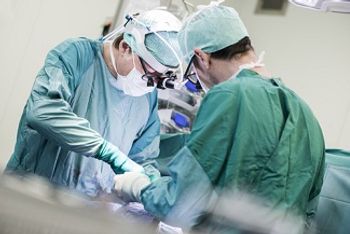
In an attempt to provide the best possible care for her unborn child, a Honduras woman with suspected Zika infection traveled to the United States where she then gave birth to a baby with microcephaly at Hackensack University Medical Center.
In an attempt to provide the best possible care for her unborn child, a Honduras woman with suspected Zika infection traveled to the United States where she then gave birth to a baby with microcephaly at Hackensack University Medical Center, the largest hospital in the state which was properly equipped to handle Zika infections.
The unnamed woman was staying with relatives in New Jersey when she was admitted to the hospital on Friday May 27, 2016. In a press briefing regarding the case, Ihor Sawczuk, MD, president of the Hackensack University Medical Center stated that, “With the emergence of the Zika virus epidemic, we are committed to keeping our healthcare team and community informed and involved on all of the latest developments, screening methods and treatment protocols for this disease.”
With the mother’s clinical history and the hospital’s own findings through testing, the team, comprised of Abdulla Al-Khan, MD, chief of pediatric infectious disease at Hackensack University Medical Center, and Julia Piwoz, MD, section chief of infectious diseases at Hackensack University Medical Center, suspected the women was infected with the Zika virus. After further assessment on Monday, May 30, which uncovered “various issues with the fetus,” including low levels of amniotic fluid, the team of physicians decided that there was a “medical need to deliver.” Through an "uncomplicated" and "uneventful" caesarean section, the staff delivered the infant, who was said to be born with “significant microcephaly,” as a direct cause of the mother’s Zika infection.
The team stated that the mother will remain in the hospital under staff care as long as it takes her to become stable. Most mothers recovering from a caesarean section typically require between 3-4 days to recuperate; however, this case has been an extremely difficult time for the family, especially for the mother, who is "trying her best to cope with this, emotionally."
The baby is currently being evaluated by pediatricians and a pediatric development team for “complications related to congenital Zika,” stated Dr. Piwoz. The baby was found to have “microcephaly as well as structural abnormalities of the eye.” The extent of the virus' effects on the baby are still being evaluated, including her ability to “suck, swallow, and eat." For now, the baby is on IV nutrition, until feeding abilities are established.
The length of time that the baby will stay in these conditions depends on the infant herself. The infant will be evaluated by a speech and swallow specialist to see if and when caretakers can switch her over to bottle or breastfeeding as a form of nutrition.
It was noted that there is no need for pregnant women in New Jersey to panic in fear of a Zika virus infection, or from transmission of the virus from the mother, or the baby, to others. Dr. Piwoz emphasized that "neither the mother nor the infected baby poses an infectious risk to others," nor have either of them acquired the infection in the United States.
For pregnant women who are concerned of contracting a Zika virus infection, Dr. Al-Khan provided recommendations, advising pregnent women to use “common judgement and universal precautions.” He added, “if you're pregnant, clearly you want to be away from areas which [have] a tremendous amount of Zika infection, for example in the Caribbean, Puerto Rico, South America, Brazil etc." However, he stated that if a pregnant woman cannot refrain from traveling to a country with active viral transmission, she should stay in cold climate areas, “wear long sleeves and use mosquito repellent.”
“Fortunately for her and us, we were able to give appropriate care to both the mother and newborn." stated Dr. Al-Khan. The lesson learned from this situation, he noted, is that it is “crucial for us, as physicians, as a community, as a medical organization, [at the] state-level, federal-level... for us to do every single thing possible to bring a halt to this epidemic, especially [from] it reaching the United States.” Calling for a rise to action, he urged that it is “time for us to get together, unite, and do every single thing possible to combat this condition.”