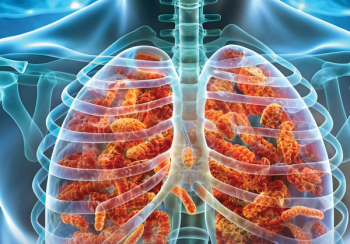
Exposure to airborne Aspergillus fumigatus is unescapable and has been clinically shown to cause increased loads of the fungal spores in the lungs of patients with asthma. The buildup of fungal spores can lead to allergic bronchopulmonary aspergillosis (ABPA), a fungal disease that reportedly reduces the quality of life of over 5 million individuals living with asthma.
In a new study published in Nature Communications, investigators from the University of Manchester discovered a genetic mutation linked to a 17-fold increase in the number of fungal spores present in the lungs.
“Our results indicate patients carrying the discovered mutation in the transcription factor, carry a higher burden of Aspergillus in their respiratory airways and this might contribute to worse asthma outcome,” Sara Gago, PhD, a research fellow funded by the National Centre for the Replacement, Reduction and Refinement of animals in research, and the investigator that discovered the mutation told Contagion®.
The investigators have indicated that the discovery of the mutation has provided a valuable component of information that can be used to develop a test to determine if people are more at risk of having complications or developing serious illnesses from Aspergillus exposure.
Dr. Gago discovered the increased risk of the mutation by comparing normal cells to epithelial cells that were gene edited using CRISPR to possess a mutation of the gene ZNF77.
ZNF is a transcription factor that belongs to the zinc finger protein family. The gene is primarily responsible for protecting the extracellular matrix of the epithelial tissue of the lungs. Additionally, the gene has been previously linked with increased cytokine release in patients with inflammatory disease. This particular investigation focused on the variant rs35699176 in ZNF77.
Genome editing demonstrated that rs35699176 causes “loss of integrity of the bronchial epithelium and increases levels of extracellular matrix proteins,” the study authors write. This mutation therefore promotes the adhesion and growth of Aspergillus fumigatus.
RNA sequence and liquid chromatography—tandem mass spectrometry analysis revealed that rs35699176 upregulates vesicle trafficking leading to an increment of adhesion proteins which then make cells carrying rs5699176 more receptive to Aspergillus fumigatus in the early stages of infection.
The findings have led investigators to conclude that ZNF77 is a controller of the colonization of Aspergillus and that the gene can be used as a marker for patient stratification.
“Our study indicates ZNF77 to control the expression of proteins contributing to keep the structure of the lung epithelium and also extracellular matrix components, key factors for the interaction of the host with pathogens,” Dr. Gago stressed to Contagion®.
According to Paul Bowyer, PhD, who was a lead investigator on the study which was funded by the Fungal infection Trust and supported by the National Institute for Health Research Manchester Biomedical Research Center, the investigators have yet to discover the reason the mutation occurs.
The investigators indicate that future research will focus on determining if the genetic mutation is a risk factor for individuals who are suffering from other fungal diseases and whether or not the mutation can be used as a prognostic marker.