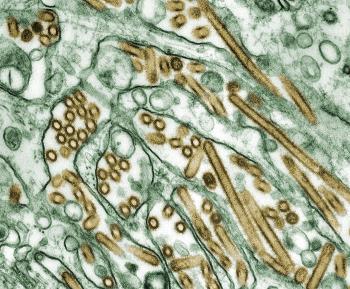
A Yakima County resident exposed to infected dairy cattle has died of avian influenza. A third human case has also been confirmed as H5N1 spreads to 33 herds in the county.
Deaths associated with pneumoconiosis fell 40% from 1999 to 2018, with the greatest decrease among coal workers cases, according to a new report.
Pneumoconiosis deaths continued to decline in the US through 2018, according to a recent analysis highlighted in the Centers for Disease Control and Prevention (CDC)
The report found that occupational lung diseases caused by inhaling various dust particles declined from 2738 in 1999 to 1632 in 2018, continuing decades of declining pneumoconiosis deaths.
“The decrease likely reflects the impacts over the past several decades of prevention strategies and also less people in the US working in jobs with heavy exposure to mineral or cotton dust,” Jessica Bell-Johnson, MPH, Association of Schools and Programs of Public Health/CDC public health fellow, told Contagion®. “Despite the decline, it is important to recognize that pneumoconiosis-associated deaths do not typically occur until many decades after exposures to causative dust."
So, Bell-Johnson said, more recent outbreaks in pneumoconiosis—such as in coal miners or artificial stone countertop workers—are not reflected in mortality data.
"In view of this, occupational dust exposure reduction, early case detection, and continued surveillance to monitor trends continue to be important,” she said.
The analysis involved reviewing multiple cause-of-death data from the CDC National Vital Statistics System for people age 15 or older along with industry and occupation data. Pneumoconiosis deaths fell by 40.4%. The biggest decrease was in coal workers’ pneumoconiosis, which fell 69.6% to 305 deaths in 2018 from 1002 in 1999, followed by silicosis, which fell 53.0% to 87 in 2018 from 185 in 1999. Those attributed to other inorganic dusts such as aluminum, bauxite, beryllium, iron, and tin oxide increased 108.3% to 25 in 2018 from 12 in 1999.
“Among those categorized as other inorganic dusts, berylliosis and siderosis were the most frequently reported diseases,” Bell-Johnson told Contagion®. “However, because of small death counts, trends in pneumoconiosis attributable to other inorganic dusts could not be fully evaluated by distinct disease categories.”
Most pneumoconiosis deaths were among male patients (93.6%), 41% were ages 75-84, and 94.6% were white. The majority (60.1%) were associated with asbestosis, and 25.8% were coal workers’ pneumoconiosis.
“Pneumoconiosis-associated deaths continue to occur, underscoring the importance of occupational dust exposure reduction and early case detection,” Bell-Johnson told Contagion®. “Medical surveillance can identify at-risk groups of workers, which can help prioritize efforts to reduce exposures.”
The report shows that the country is on track to surpass the goal of the Healthy People 2020 Occupational Safety and Health Objective 4 to reduce the number of pneumoconiosis deaths from 2430 deaths in 2005 to 2187 deaths in 2020. It validates prevention strategies, such as the Mine Safety and Health Administration’s (MSHA) standard on respirable coal mine dust and the Occupational Safety and Health Administration’s exposure limit crystalline silica.
Further study and monitoring of disease trends over time, in particular focusing on pneumoconiosis attributable to other inorganic dusts, is needed.