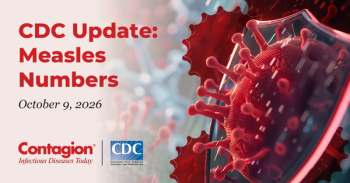
The latest CDC numbers show a 5.0% increase of measles cases from week-to-week. The US total reached 4,080 confirmed cases, 78% above all of 2025.
Jason Gallagher, PharmD, discusses the risk factors for experiencing complications of influenza.
Segment Description: Jason Gallagher, PharmD, FCCP, FIDSA, BCPS, clinical professor at Temple University College of Pharmacy and editor-in-chief of Contagion®, discusses the risk factors for experiencing complications of influenza.
Transcript (modified slightly for readability):
Gallagher: Most years the mortality rate from influenza is a U shaped curve where the mortality is the highest in the very young and in elderly patients and that's due to immune response, but also comorbid diseases, particularly in the elderly. Comorbidities are really what people put people at the highest risk of complications from influenza. Asthma, COPD, other pulmonary conditions, even heart conditions, and the immunocompromised population, all of these patients are at a significantly higher risk of complications from influenza than the general population.
It's such a list that if you were to break it down before it was recommended to be given universally, if you just look at this special populations that the influenza vaccine was recommended for, it's so many people that it just makes more sense to vaccinate everyone anyway. While everybody should get a flu shot, people with those types of comorbidities are at the highest risk of complications, and it's essential that we vaccinate them.