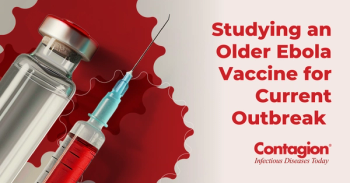
Investigators accessed longitudinal human data from ebola virus vaccination for signals of efficacy against the Bundibugyo species now surging in the Democratic Republic of Congo.
President Obama states, "This is not something where people are going to die from it. It is something we have to take seriously."
The Zika virus has hit a total of 26 countries and regions so far, and by the looks of it, the illness isn’t going anywhere. But President Barack Obama is hoping to eliminate the virus with a request of $1.8 billion dollars in emergency funding.
Zika has been all over the news lately — and for good reason. The virus, which is primarily transmitted from Aedes aegypti mosquito to human, was found to spread through
“The good news is this is not like Ebola, people don’t die of Zika — a lot of people get it and don’t even know that they have it,” President Obama said on
The majority of the funds ($1.48 billion) would go to the Department of Health and Human Services (HHS). From there the funds will be split up between the Centers for Disease Control and Prevention (CDC), Centers for Medicare and Medicaid Services, Vaccine Research and Diagnostic Development & Procurement, and Other HHS Response Activities. The remainder of the funds will go to the US Agency for International Development ($335 million) and the US Department of State ($41 million).
“These resources will support critical public health actions underway, including preparedness, surveillance, data collection, and risk communication,” a White House
The Zika virus is strongly connected to microcephaly — a condition where a child is born with smaller-than-normal brain and head size. Although it has yet to be scientifically proven, enough cases across the Americas and even Hawaii have led officials to believe the association. Notably, a piece of the requested emergency funding will support pregnant women’s health.
“And so we are going to be putting up a legislative proposal to Congress to resource both the research on vaccines and diagnostics but also help in terms of public health systems,” President Obama said. “…But there shouldn’t be panic on this. This is not something where people are going to die from it. It is something we have to take seriously.”