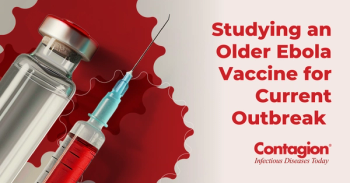
Investigators accessed longitudinal human data from ebola virus vaccination for signals of efficacy against the Bundibugyo species now surging in the Democratic Republic of Congo.
Although Louisiana has yet to see any locally-acquired Zika infections, another mosquito-borne virus, West Nile, remains endemic in the state.
Following the devastating flooding in the central part of the state, which infectious disease should Louisianans fear more: Zika or West Nile virus?
The answer, it seems, depends on whom you ask.
On August 21, National Institute of Allergy and Infectious Diseases (NIAID) Director Anthony Fauci, MD, told ABC’s “This Week” program that the Aedes aegypti mosquito, which carries Zika, could soon appear in areas across the southern part of the country.
To date, however, the state has reported zero locally-acquired cases of the mosquito-borne virus that has ravaged Brazil and parts of the Caribbean since late 2014. Public health officials in Louisiana have gone on the record saying that they are more concerned about the emergence of West Nile virus in the aftermath of the floods that have ravaged the area surrounding the state capital, Baton Rouge, than they are about Zika, telling Contagion recently that flood waters actually “washed out” much of the state’s mosquito
Indeed, earlier this month, the New Orleans Times-Picayune
“The risk for WNV is much greater than for Zika in Louisiana,” Susanne Straif-Bourgeois, PhD, MPH, associate professor of epidemiology at the LSU School of Public Health in New Orleans told Contagion.
The reasons for this, she added, are multi-factorial. Unlike Zika, birds play an important role in the epidemiology of West Nile virus. “Birds are seen as virus amplifiers since early in the season Aedes mosquitoes tend to feed on nesting birds, but when these birds start to leave their nests, mosquitoes find different blood sources such as humans, horses, and dogs,” Dr. Straif-Bourgeois explained. “For Zika virus, as we know of now, there is no animal reservoir involved. It is only transmitted from human to mosquito to human, and so on.”
In addition, multiple experts have pointed out that West Nile is endemic in Louisiana, and has been since 2001, “when we had the big outbreak, mainly from migratory birds bringing [this virus] down from New York City,” she said.
Unfortunately, this is not a simple case of “pick your poison,” of course. While Zika has been associated with troubling complications, including birth defects in babies born to pregnant women infected with the virus, its symptoms are generally mild. West Nile, on the other hand, has been associated with neurological complications in severe cases, although such cases are rare.
Although the threat of West Nile in the region has largely been overshadowed by the media frenzy surrounding Zika, Dr. Straif-Bourgeois noted that since the preventive measures for the two viruses are essentially the same—mosquito control being foremost among them—the emergence of a West Nile outbreak resulting from too much of a focus on Zika is not an issue.
“Natural disasters in the continental United States have rarely been accompanied by outbreaks of viruses spread by mosquitoes,” Centers for Disease Control and Prevention (CDC) spokesperson Benjamin Haynes told The Times-Picayune. “Flooding immediately washes away existing mosquito larvae populations.” Added the CDC in a separate statement, “We do not expect to see an increase in Zika virus as a result of flooding in Louisiana.”
Brian P. Dunleavy is a medical writer and editor based in New York. His work has appeared in numerous healthcare-related publications. He is the former editor of Infectious Disease Special Edition.