Investigational agent Zelicapavir cut time to complete RSV symptom resolution by up to a week and lowered hospitalization in high-risk adults.

Matt Hoffman is the editorial director for NeurologyLive, Contagion, IJMSC, and CGTLive, as well as the Eye Care Network (Ophthalmology Times, Modern Retina, Ophthalmology Times Europe, and Optometry Times). He has covered medical news for MJH Life Sciences, the parent company, since 2017.
He executive produces the Optometry Times podcast, From Paper to Clinic, and previously hosted the Medical World News shows Deep Dive and Second Opinion.
You can follow him on X @byMattHoffman and on LinkedIn, or email him at mhoffman@mjhlifesciences.com.
Investigational agent Zelicapavir cut time to complete RSV symptom resolution by up to a week and lowered hospitalization in high-risk adults.

CDC says the Bundibugyo virus outbreak in the DRC is the second-largest Ebola outbreak on record, with 9735 confirmed cases and 4690 deaths.

Stopping empiric antibiotics early nearly tripled antibiotic-free days in neutropenic fever, and 5-day oseltamivir prophylaxis matched 10 days in hospital exposures.
Investigational asuptegravir cut HIV-1 RNA by up to 2.36 log10 copies/mL in 10 days, and adding fostemsavir boosted CD4 gains in immunologic nonresponders.
In an ECOSPOR III analysis, all-cause hospitalization by week 4 fell to 3.4% with fecal microbiota spores vs 16.1% with placebo in recurrent C difficile infection.

CDC lists 5 active multistate outbreaks tied to oysters, raw milk cheese, sprouts, and pet turtles, with recalls in effect for 4 of them.

Day 42 all-cause mortality was 23.8% with oral olorofim vs 24.3% with AmBisome plus standard of care in invasive aspergillosis unsuited to azole therapy.
MBL producers rose from 20.4% to 48.6% of US carbapenem-resistant Enterobacterales from 2021 to 2025, while aztreonam-avibactam stayed active against 97.7% of them.
Switching to once-daily bictegravir/lenacapavir kept adverse event rates similar to comparators and metabolic markers stable across comorbidity groups in ARTISTRY-1 and -2.

The latest CDC numbers show a 4.0% increase in measles cases from week-to-week, bringing the 2026 US total to 4588 confirmed cases. Ninety-six percent of cases are outbreak-associated.
Isavuconazole had a lower liver adverse event signal than voriconazole and posaconazole, while olorofim, manogepix, and rezafungin held activity against resistant molds.
Oral pritelivir improved lesion healing and cut hospitalizations from 76% to 29.4% vs investigator's choice therapy in immunocompromised patients with refractory HSV.

Investigational cefiderocol-xeruborbactam inhibited 98.5% of carbapenem-nonsusceptible Acinetobacter and nearly all Enterobacterales in global surveillance data.
Oral zelicapavir cut time to complete RSV symptom resolution by up to 1 week in high-risk adults, but it did not meet its primary end point in a phase 2 trial.

The FDA approved bepirovirsen (Hibsago; GSK) with nucleos(t)ide analogue therapy for chronic hepatitis B, based on B-Well 1 and 2 functional cure rates of 19% vs 0% with placebo.

Pritelivir (Hovilpri) healed all lesions by day 28 in 63% of immunocompromised adults with refractory HSV versus 34% with investigator's choice in the phase 3 PRIOH-1 trial.
New gyrA testing guides ciprofloxacin use for gonorrhea, cutting ceftriaxone reliance while tackling resistance, access, and FDA hurdles.

Venky Soundararajan, PhD, co-founder and chief scientific officer of nference, explains what the semaglutide-COVID-19/influenza data can and can't tell clinicians about mechanism, bias, and the evidence bar before it should shape prescribing.

A retrospective cohort study of more than 29 million patients found adults with prior semaglutide use had significantly lower 30-day mortality, hospitalization, and acute kidney injury after COVID-19 or influenza infection compared with a metformin comparator group.

The phase 3 priMe trial found the investigational vaccine did not demonstrate noninferiority for preventing tuberculosis infection, though the study authors cited surrogate end point and exposure-imbalance issues that complicate interpretation.
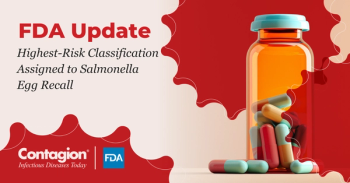
FDA has assigned its highest-risk Class I classification to a recall of nearly 19 million eggs linked to a multistate salmonella enteritidis outbreak that has sickened 98 people across 17 states.
The FDA has accepted EIT Pharma's new drug application for lonafarnib, an investigational oral therapy for chronic hepatitis D, supported by the phase 3 D-LIVR study, the largest clinical trial conducted to date in the disease.

A phylodynamic analysis combining Arizona wild bird surveillance with national sequence data found the H5N1 D1.1 genotype spread in a stepwise pattern among adjacent US flyways during fall 2024, with limited direct exchange between the Pacific and Atlantic flyways.

A serologic study of patients in northwestern Italy found hantavirus antibodies in 7.3% of samples tested, with neutralization data suggesting Puumala virus as the likely infecting strain in a region where rodent-borne viral infections are rarely diagnosed.

A real-world analysis of the OPERA cohort found no HIV infections among 315 women using long-acting cabotegravir for PrEP, despite frequent short delays in maintenance injections, reinforcing the regimen's real-world effectiveness.

Week 96 data from the LATA trial show Cabenuva was superior to daily oral therapy in adolescents with HIV, while new real-world OPERA cohort data reinforce comparable effectiveness in adults, both presented at AIDS 2026.

An oral antiviral candidate blocked airborne and direct-contact transmission of a measles-like virus in ferrets, offering a potential new outbreak-control tool as US measles cases hit a 35-year high.

Atea Pharmaceuticals' bemnifosbuvir/ruzasvir combination met its primary endpoint of noninferiority to sofosbuvir/velpatasvir in the phase 3 C-BEYOND trial, achieving comparable cure rates for hepatitis C with as little as 8 weeks of treatment.

FDA's acting deputy commissioner for food said the US food supply remains safe even as CDC-confirmed cyclosporiasis cases climbed past 11,000, while a new survey found nearly half of Americans don't trust the agency to manage the outbreak.

Sharon Nachman, MD, chief of pediatric infectious disease at Stony Brook Children's Hospital, explains why local resistance data, not just global forecasts, should drive today's empiric antibiotic choices in children.
September 15th 2026