Microbial biofilms can present a variety of medical challenges by generating chronic infections, modulating host immune response, contaminating medical devices or environments, and facilitating the emergence of antimicrobial resistance.
Investigators at the Lewis Katz School of Medicine at Temple University have shown that a new monoclonal antibody treatment is able to break apart these communities of harmful bacteria, which could aid existing antibiotic treatments in more efficiently clearing out infections. Their research was published in Nature Communications.
The investigators tested a human monoclonal antibody with pan-amyloid-binding activity, mAb 3H3, against biofilms formed by Salmonella enterica serovar typhimurium.
The antibody was isolated from a healthy human subject. The study team was interested in 3H3’s ability to attach to β-amyloid.
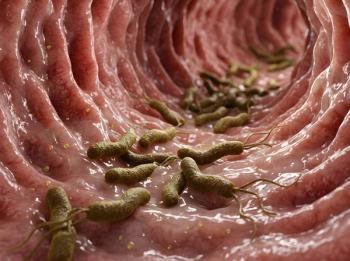
“A form of amyloid called curli is secreted by bacterial cells and is a major component of biofilms. Bacterial amyloid curli acts like glue, enabling bacterial cells to adhere to one another and form a continuous film over a surface,” according to a press release issued by Temple Health.
“The antibody disrupts the biofilm structure, enhancing biofilm eradication by antibiotics and immune cells,” the study authors wrote.
Curli fibrils are the primary component of Enterobacteriaceae biofilms protecting the bacteria from immune cells and antibiotics.
Study author Çagla Tükel, PhD, associate professor at the Lewis Katz School of Medicine, explained the mechanism of action to Contagion®.
“The hope is the antibiotics would be effective since the biofilm is broken. And the strategy we chose here is to target the amyloid component that's very prevalent in the matrix of the enteric biofilm. This is a protein that folds into these beta-sheet structures called curli. It comprises 85% of the extracellular matrix. If we can block the incorporation of this protein into the biofilm structure, we can open up the compact structure of the biofilms and we can do a secondary treatment.”
The mAb 3H3 treatment made the Salmonella typhimurium biofilms less tightly adherent, potentially exposing them to eradication by antibiotics which work in tandem with the antibody for efficacy that might not otherwise be possible.
Additionally, the 3H3 treatment appeared to prevent bacteria from entering circulation, where they might lead to sepsis. Therefore, the approach may even be able to reduce risk of sepsis.
The fluroquinolone, β-lactam, and aminoglycoside class antibiotics demonstrated increased cell killing when biofilm extracellular matrices were altered by 3H3. However, more research will be necessary to continue development.
“…the effects of biofilm disruption on antibiotic sensitivity will likely depend on whether the mechanism of cell killing is concentration dependent (fluoroquinolones, aminoglycosides) or time-dependent (β-lactams). Additional studies will be necessary to explore these interactions in vitro and in vivo,” study authors wrote.
Future study may also target other microbial biofilms. Other pathogens such as Escherichia coli, Staphylococcus aureus, and Pseudomonas aeruginosa have curli or curli-esque amyloids in their biofilms.
“It’s exciting. We used Salmonella biofilms as a model to show this. What we are hoping to show in the future is that since amyloids are found in many different bacterial biofilms, now we have a pan-anti-amyloid antibody that can be effective against many different types of bacterial biofilm. So we want to test this antibody in different settings,” Tükel wrote.