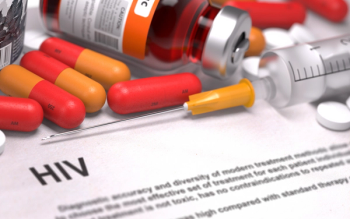
The guidelines issued by the Department of Health and Human Services (HHS) have been updated with recent, evidence-based consensus of The Panel for the Use of Antiretroviral Agents in Adults and Adolescents.
Because norovirus is highly contagious in low concentrations, detection is typically conducted via a PCR-based method. But that requires time, a lab setting, and trained personnel.
A new portable, smartphone-based detection system developed by investigators at the University of Arizona uses a fluorescence microscope assay to identify a miniscule amount of norovirus particles in water samples.
Because norovirus is highly contagious in low concentrations, detection is typically conducted via a polymerase chain reaction (PCR)-based method. But that requires time, a lab setting, and trained personnel.
"It only takes a very small number of norovirus particles to cause an infection in humans, so we need a really sensitive detection method," Jeong-Yeol Yoon, PhD, professor of biomedical engineering at the University of Arizona, who led the team, said in a
In the findings presented at the American Chemical Society (ACS) Fall 2019 National Meeting & Exposition, the research team unveiled their smartphone-based device, which features a fluorescent microscope made from a commercially available light microscope accessory, a separate light source, and 2 band-pass filters. The system also has a paper microfluidic chip, to which a water sample containing norovirus is added and then mixed with a suspension of fluorescent beads with norovirus antibodies attached. The beads bind to the virus particles and gather together in larger, more identifiable fluorescent groups.
Investigators photographed the chip with the smartphone fluorescent microscope and ran the images through a companion app to calculate norovirus concentrations. As few as 10 norovirus particles are enough to sicken an individual.
“The lowest detection limit corresponded to about 5 or 6 norovirus particles per sample, so it's very close to the single-virus level,” Yoon said in the press release. “When norovirus reaches levels detectable by other methods, the person is already seriously ill. But if we can detect the virus earlier, they can receive medical care sooner.”
Yoon and his team recently created a 3D-printed case to house the whole device and make it more portable. The only issue now involves the water source for testing. The device proved effective at detecting norovirus in both purified and reclaimed wastewater samples, but the team hit a snafu in testing tap water.
“We believe that the chlorine in tap water is affecting the assay,” Yoon said. “We don't think it will be a problem to treat the water to remove chlorine before performing our method.”
The study, “