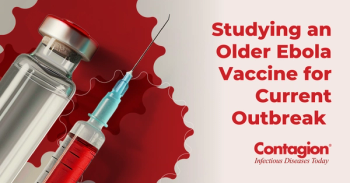
Investigators accessed longitudinal human data from ebola virus vaccination for signals of efficacy against the Bundibugyo species now surging in the Democratic Republic of Congo.
Many women who are infected with hepatitis B (HBV) during pregnancy go untreated, leaving their offspring at risk for a chronic HBV infection.
Although untreated hepatitis B virus (HBV) in pregnant women can result in a chronic HBV infection in their offspring beginning at birth, the majority of pregnant women infected with HBV go untreated during their pregnancy, according to the recent research.
“Most adults clear the virus within a few weeks to a few months of beginning treatment, but in young children up to 95% progress to chronic infection and about 25% of those infected during the perinatal or postnatal period die prematurely,” said lieutenant Ruth Link-Gelles, PhD, MPH, in a presentation on the topic at the 2017 EIS Conference in Atlanta, Georgia on April 24, 2017. Dr. Link-Gelles noted that post-exposure prophylaxis is effective in about 95% of perinatal HBV infections “if administered correctly,” but warned that many women who should be receiving treatment to protect their infants are not tested for viral load and, as a result, are not treated for the infection during pregnancy.
“Treatment recommendations for pregnant women include [potentially] three different drugs. Treatment starts late in pregnancy and discontinues at birth or within three months,” Dr. Link-Gelles stated, remarking that the treatment process is not particularly grueling or complicated.
For their study, Dr. Link-Gelles and her team evaluated demographic, clinical, and maternal antiviral treatment information from the medical charts of HBV-infected pregnant women in Michigan and New York City collected between 2013 and 2015. “Those two jurisdictions received additional funding to collect demographics during that time period,” she said, adding that the goal was to establish a baseline to determine if this at-risk group was receiving adequate identification and treatment.
“Variables of interest included viral load results, antiviral treatment status, ethnic background, and awareness of infection before pregnancy,” Dr. Link-Gelles said. The group defined “high viral load” as >200,000 IU/mL.
After excluding patients in the population who did not have a recorded viral load, were missing a viral load test date, and subsequent births in multiparous women, the team was left with a population of 1521 women. A total of 151 of these women met the requirements for high viral loads and 66 of the 151 were treated for their HBV infection.
“Those treated and not treated were of similar age, and most [of the population] were of Asian or Pacific Islander descent,” observed Dr. Link-Gelles, adding that women born in China were more likely to be treated and that women on Medicaid were more likely to be treated than those with private insurance. Four of the 57 infants born to untreated mothers were HBV-positive, compared to none of the infants both to treated mothers.
Dr. Link-Gelles noted that the study did have some limitations, including that New York City contributed 98% of the data included in the analysis and that 63% of the data had to be dropped due to exclusion criteria. “Viral load is not necessarily tested in all women,” she added, pointing out that two-thirds of women with high viral load numbers did not receive antiviral treatment during pregnancy, thereby placing their child at risk of infection. The team recommended that viral load testing be more rigorously implemented and plans to conduct a follow-up study that will involve post-birth interviews of the mothers to determine how many ended up getting treatment after their initial information was recorded in the surveillance system.