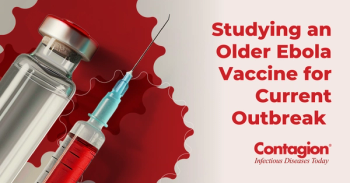
Investigators accessed longitudinal human data from ebola virus vaccination for signals of efficacy against the Bundibugyo species now surging in the Democratic Republic of Congo.
Efforts to bring to market a vaccine for the fight against Zika virus, at least via the private sector, have been stalled over concerns regarding the “marketability” of these products, according to multiple reports in the business press.
Efforts to bring to market a vaccine for the fight against Zika virus, at least via the private sector, have been stalled over concerns regarding the “marketability” of these products, according to multiple reports in the business press.
Last week, online pharmaceutical industry news outlet
Indeed, as GlaxoSmithKline vaccines chief Moncef Slaoui explained to Bloomberg, research suggests that populations within the regions currently affected by Zika, such as Brazil and Puerto Rico, could develop natural immunity against the virus within the next five to 10 years, making the need for a vaccination program less urgent.
“The notion is not that there is no need for a vaccine,” Slaoui told Bloomberg. “What’s not predictable is how to use this vaccine.”
Interestingly, as the FiercePharma report notes, many of the same companies that have taken a cautious approach to entering into the Zika vaccine R&D fray had been much more aggressive during the Ebola crisis in 2014. However, this may be due to the fact that Ebola virus causes much more serious illness—and is more likely to result in death—than Zika, which causes relatively mild symptoms and has only one known major complication: microcephaly in newborns to pregnant women infected with the virus. To date, among major pharmaceutical manufacturers, only Sanofi, makers of a vaccine for Dengue fever, has committed to developing a Zika vaccine. According to experts, a viable vaccine for Zika may take up to 20 years to develop, test, produce, and distribute.
Given cost considerations for private companies, many public health experts believe that the global community, led by the World Health Organization and the United Nations, should take a leadership role in the development of a vaccine to combat viruses such as Zika, by providing funding and helping to formulate research teams of experts in each of these emerging diseases. They note that while excellent research on the virus has emerged from countries such as Brazil, many other countries where it could potentially surface, including the United States, are lagging behind.
“The balance between corporate interests—i.e., profits—and service with benevolence to public health is not what most people think,” John Lednicky, PhD, associate professor, College of Public Health and Health Professions, University of Florida, told Contagion. “It is very expensive to maintain an active research program for all the different viruses that affect humans, and the costs of testing a vaccine and getting one approved for human use are huge… With profits in mind, it is unlikely that pharma will prioritize the development of a product [for a disease] some experts claim will not be a significant problem in countries such as the United States that can pay for [a vaccine] and purchase [it] in bulk. The risks are real; over-expenditure for the development of drugs or vaccines could bankrupt a company.”
Brian P. Dunleavy is a medical writer and editor based in New York. His work has appeared in numerous healthcare-related publications. He is the former editor of Infectious Disease Special Edition.