Although azithromycin or another antibiotic is given to an estimated one of four preschool-age children in emergency departments for wheezing episodes, it failed to demonstrate benefit in a new multi-center trial.

Although azithromycin or another antibiotic is given to an estimated one of four preschool-age children in emergency departments for wheezing episodes, it failed to demonstrate benefit in a new multi-center trial.

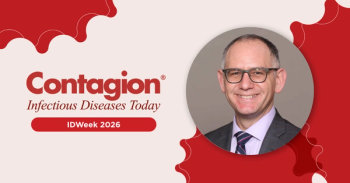
In the second episode of the series with Perry N. Halkitis, PhD, MS, MPH, he brings his personal experience to this topic and questions if there should be a shift in who manages the primary care needs of these patients.

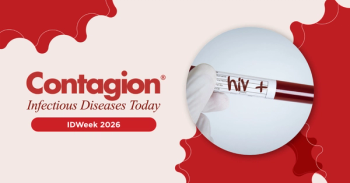
The federal agency gave the nod for the smallest once-daily single tablet regimen available for virologically suppressed adults with HIV, including those on complex regimens. The approval is based on the results of the 2 phase 3 ARTISTRY trials.

The FDA has approved formulations for the 2026-2027 vaccines including Pfizer-BioNTech's Comirnaty XFG, Novavax's commercial partners Sanofi and Takeda have secured approvals for its Nuvaxovid, and Moderna's Spikevax and mNEXSPIKE vaccines, all with protections against the currently circulating variant.

The FDA has approved Pfizer-BioNTech's 2026-2027 Comirnaty XFG formula, an updated COVID-19 vaccine targeting the XFG variant, for adults 65 and older and for individuals ages five through 64 with at least one high-risk underlying condition.

Gavin Harris, MD, provides some context around what is happening in the Democratic Republic of Congo regarding the outbreak including the country’s inherent challenges as well as discussing the latest in testing, vaccines, and treatments of this rare strain of Ebola.

Venky Soundararajan, PhD, co-founder and chief scientific officer of nference, explains what the semaglutide-COVID-19/influenza data can and can't tell clinicians about mechanism, bias, and the evidence bar before it should shape prescribing.

The federal agency gave the nod to dolutegravir (Tivicay PD), making it the first second-generation integrase inhibitor cleared for children with HIV weighing at least 2 kg, including eligible newborns.

A retrospective cohort study of more than 29 million patients found adults with prior semaglutide use had significantly lower 30-day mortality, hospitalization, and acute kidney injury after COVID-19 or influenza infection compared with a metformin comparator group.

Two Lancaster County residents have died from measles-associated complications, the state's first measles deaths in 35 years.

The phase 3 priMe trial found the investigational vaccine did not demonstrate noninferiority for preventing tuberculosis infection, though the study authors cited surrogate end point and exposure-imbalance issues that complicate interpretation.

Federal health officials are tracking simultaneous multistate outbreaks tied to frozen organic blueberries sold at Publix and alfalfa sprouts sold under the Calco and Everything Sprouts brands, together sickening more than 65 people across roughly 20 states.

Histoplasma, Blastomyces, and Coccidioides remain underrecognized causes of community-acquired pneumonia, particularly when clinical presentation mimics bacterial disease. Knowing where to look and when reshapes the diagnostic and therapeutic approach.

The US childhood vaccine schedule was the big news this month with the presidential executive order making changes to it as well as the latest Centers for Disease Control and Prevention kindergarten immunization numbers for the 2025-2026 year. Learn more about the news with clinician commentary and how it might impact patient care.

This week's top infectious disease stories cover treatment strategies for daptomycin-resistant Enterococcus faecium, fluoroquinolone prescribing's link to antimicrobial resistance, the legal standing of the childhood vaccine schedule executive order, and rising vaccine exemption rates alongside declining MMR coverage that's fueling continued measles outbreaks.

Newly released CDC data show childhood immunization rates have steadily declined since 2020, pushing measles vaccination coverage below the threshold needed for herd immunity and leaving an estimated 280,000 kindergartners without documented vaccinations this year. Robert Hopkins Jr, MD, medical director of the National Foundation for Infectious Diseases, discusses the latest vaccine data, geographic patterns, and how public health and school officials can address this continued trend.

Fluoroquinolone prescribing emerged as key driver of AMR in multiple pathogens in a 14-year study period at US Veterans Affairs medical centers.

Cases and deaths continue to increase in the Democratic Republic of the Congo, but the country's neighbor, Uganda, is declared Ebola free.

With the news this week that childhood vaccine exemptions were at a historical high, it is important to understand what they are and how they are applied. Pediatrician Sharon Nachman, MD, offers some insights about the ability to forgo vaccines because of exemptions.

As of August 17, federal officials are reporting more than 15, 716 cases, hundreds of hospitalizations, and nearly all US states have been affected.

The latest national numbers show a decrease in vaccination rates, along with a spike in the number of immunization exemptions, leading to an increase in the number of cases for vaccine-preventable diseases such as measles.

In the second episode with Jason M. Goldman, MD, MACP, he touches upon the legal side of the order and how it may affect the childhood vaccine schedule.

FDA has assigned its highest-risk Class I classification to a recall of nearly 19 million eggs linked to a multistate salmonella enteritidis outbreak that has sickened 98 people across 17 states.

Daptomycin-resistant Enterococcus faecium bacteremia is an emerging, high-mortality challenge in transplant and other high-risk patients, requiring early recognition, aggressive source control, and reliance on limited alternatives—most notably linezolid—with combination or salvage therapies considered when options are constrained.

This week's infectious disease news spans a broad-spectrum carbapenem review, an expanding jalapeño-linked salmonella recall, the EU approval of Maviret for acute hepatitis C, and clinician backlash against President Trump's executive order reshaping the childhood vaccine schedule.

In the second part of the interview with Sharon Nachman, MD, she touches upon how the administration’s shared clinical decision-making category related to childhood vaccines will affect the hepatitis B and rotavirus vaccines and the expectations there will be subsequent disease increases.

Jason M. Goldman, MD, MACP, discusses the potentially damaging effects of the rhetoric coming from the presidential executive order, including downstream consequences and his concerns about the prospective findings of the HHS Task Force on Safer Childhood Vaccines associated with the order.

The presidential executive order changing the measles, mumps and rubella (MMR) vaccine from a combination to a single-antigen vaccine means children will get more shots not less. Sharon Nachman, MD, offers some insights around the challenges of how the order’s latest changes could affect pediatric vaccine schedules.

The EU recently approved glecaprevir/pibrentasvir (Maviret), an eight-week direct-acting antiviral regimen, which offers people with hepatitis C the fastest treatment option available, giving European health systems a new tool in aiding the World Health Organization's goal of eliminating the virus by 2030.

The FDA has accepted EIT Pharma's new drug application for lonafarnib, an investigational oral therapy for chronic hepatitis D, supported by the phase 3 D-LIVR study, the largest clinical trial conducted to date in the disease.