Barbara Kowalcyk, PhD, MA, discusses the ongoing challenges of the surveillance system including the federal government’s reductions in food safety funding, and personnel, and how it could affect future outbreaks.
Los Angeles has been experiencing this challenging bacteria in recent years with the potential of it becoming carbapenem-resistant in the future. Shaun Yang, PhD, D(ABMM), FIDSA, MLS(ASCP), provides commentary about his team's work in this area and the role of genomic sequencing to uncover this troublesome pathogen.
Enteric fever (typhoid or paratyphoid fever) infection in travelers returning to the US is likely resistant to ciprofloxacin, and with some cases also resistant to ceftriaxone, CDC investigators advise treatment guided by susceptibility.
In early in vitro testing, a bacterial cellulose dressing loaded with bacteriophages reduced S aureus and P aeruginosa biofilms, and optimized versions reached 70% to 90% reductions.
The Peggy Lillis Foundation's CEO and Co-founder Christian Lillis discusses the organization's initiatives for C diff month, and offers a glimpse of the upcoming Scientific Symposium they are hosting next week.
Federal investment since 2021 has expanded viral hepatitis surveillance staffing and elimination planning across US jurisdictions, but flat funding and ongoing uncertainty leave only 6% able to make progress toward elimination at current CDC levels.
Building on in vitro, animal, and real-world data, a new phase 2 placebo-controlled trial suggests omadacycline has clinical and microbiologic activity against Mycobacterium abscessus pulmonary disease, supporting its role in multidrug regimens. Further studies are still needed to define optimal combinations and duration.
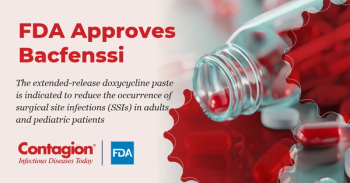
In the phase 3 SHIELD II trial, the extended-release doxycycline paste cut surgical site infections to 3.8% from 9.5% with standard of care after colorectal surgery.