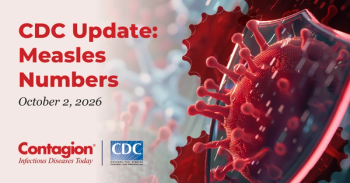
The latest CDC numbers show a 6.2% increase of measles cases from week-to-week. Last week there was a 5.4% increase in cases showing a continuing steady increase dictated by ongoing outbreaks across the US.
The Center for Forecasting and Outbreak Analytics launched today. The CDC intends the CFA to predict future infectious disease pandemics and assist leaders in coordinating a response.
Today, the US Centers for Disease Control and Prevention (CDC)
The CDC says the goals of the CFA are to use infectious disease modeling and analytics to improve our outbreak response. The CFA will be “the equivalent of the National Weather Service for infectious diseases,” the CDC explained. The CFA will also support local, state, and federal leaders as they navigate infectious disease outbreaks.
“I am excited we have launched CDC’s Center for Forecasting and Outbreak Analytics,” CDC director Rochelle P. Walensky, MD, MPH, said in a statement. “This new center is an example of how we are modernizing the ways we prepare for and respond to public health threats.”
The mission of the CFA is threefold: predict, inform, innovate. On their
CFA has been working to build an outbreak analytics team of global infectious disease experts. The CDC notes that CFA is also hiring communications specialists to ensure leaders and the general public stay informed with clear, concise messaging.
The CFA was originally announced in August 2021, when it was granted $200 million in funding by the American Rescue Plan Act. In December, the CFA worked to model the impending wave of
“I am proud of the work that has come out of this group thus far and eager to see continued innovation in the use of data, modeling, and analytics to improve outbreak responses,” Walensky said.