|Articles|August 28, 2017

CDC Quarantines Potentially Defective Equipment

Shedding light on the perils of faulty personal protective equipment.

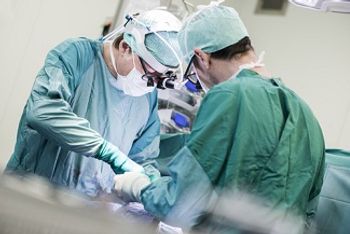
A recent 60 Minutes report is drawing attention to potentially defective equipment stockpiled by the Centers for Disease Control and Prevention (CDC). Although this special first aired in 2016, it was re-run the week of August 8, 2017, which brought forth the question of, “what is being done?”

The special focused on personal protective equipment (PPE) that was being stockpiled by the CDC for use against future outbreaks or public health emergencies, such as treating an influx of Ebola patients during an outbreak. The 60 Minutes investigative team filed a Freedom of Information Act request to obtain documents regarding MicroCool gowns that are part of the US Strategic National Stockpile (SNS). The SNS, according to the CDC, is the “nation’s largest supply of potentially life-saving pharmaceuticals and medical supplies for use in a public health emergency severe enough to cause local supplies to run out.”

The filing of the Freedom of Information Act request is especially prudent as a group of hospitals were recently awarded $454 million in damages from PPE manufacturers Kimberly-Clark and Halyard Health (formerly a division of Kimberly-Clark) after a jury found they were liable for fraud and defects within the MicroCool gowns. The 60 Minutes team reached out to Halyard. Their chief operating officer Chris Lowery responded that, “We get less than one complaint for every million gowns sold," Lowery said. "And...we've never received even one report of a healthcare professional contracting an infection as a result of a flaw in our product.” Halyard and Kimberly-Clark are reportedly challenging the court’s decision.

In response to this report, the court case, and the Freedom of Information Act request, the CDC has pulled the MicroCool gowns from the SNS and has “quarantined” them to ensure they are not used. (You can check out the MicroCool gowns here.)

The MicroCool gowns are sold on the notion that they will provide protection while keeping the person wearing it more comfortable (surgical gowns can easily make the wearer hot). The gowns tout that they passed the ASTM 1671 Standard Test Method, which means they are protective against the penetration of blood-borne pathogens. The reason for the concern, and the subsequent law suits, is that the gowns reportedly leak, and this can expose healthcare workers to blood and other potentially infectious materials (ie, urine, feces, etc.).

The 60 Minutes team noted that the MicroCool gowns were being advertised as meeting Association for the Advancement of Medical Instrumentation (AAMI) Level 4 standards, which means they are the highest level in terms of being impermeable and preventing blood from penetrating the gown to potentially expose the healthcare worker. Interestingly, if you wander around the Halyard webpage on surgical attire, the MicroCool gown no longer has this standard, although their other gowns do. And, it wasn’t that long ago that Kimberly-Clark Health was given FDA approval to market the MicroCool gowns as meeting AAMI Level 4 Standards.

Because hospital Ebola PPE carts have mostly been neglected since the outbreak ended, this report and the court finding highlight the challenges of preparedness. Surgical gowns are an extremely important aspect of infection control and faulty or defective gowns can exponentially put healthcare workers at risk. During public health emergencies, such as outbreaks of diseases that might require enhanced precautions, the availability of necessary PPE will be strained and the last thing we should be worrying about at that time is their efficacy and safety.


Related to this article

Ebola and the Ongoing Tale of US Failures
In mid-May, as the world was still grappling with an unexpected hantavirus outbreak aboard a tourism vessel, news broke of an Ebola outbreak in the Ituri Province of the Democratic Republic of the Congo spanning at least 3 health zones, including Bunia, Rwampara, and Mongbwalu.
Asymptomatic C difficile Colonization in Infants Doesn’t Mean Benign
A new study in infants challenges the long-standing belief about the pathogen’s effects in the youngest pediatric population. Senior author Joseph Zackular, PhD, provides insights around his work including how it reshapes gut development and offers potential intervention strategies to shield neonates.
How The Food Safety Surveillance Infrastructure Works in the US
In the first episode of our news series looking at the food safety network, Lynette Johnston, PhD, offers insights into how the federal government surveillance infrastructure operates, and how epidemiologists serve as food detectives in determining bacterial pathogens and potential foodborne outbreaks.
This Week's Top 5 Infectious Disease News Stories: September 12-September 18, 2026
In this week's top infectious disease stories, a Pennsylvania teen became the state's fourth measles death in weeks, the CDC reported a 17% summer surge in rabies exposure calls, new research revisited whether cefepime raises mortality risk, a multihospital review examined ceftriaxone's safety after state alerts, and examining Legionella pneumonia diagnostics.
Measles Update: September 18, 2026
The latest CDC numbers show a 5.37% increase of measles cases from week-to-week. In Pennsylvania, the fourth measles-related death was reported in 2026. Additionally, the CDC has made a change in the way it will report deaths.
CDC Responds to Surge in Rabies Exposures
A "Clinician Outreach" from the Centers for Disease Control and Prevention (CDC) in April anticipated an increase in rabies exposures, and the striking surge in case reports this summer prompted a recent health advisory alert from the federal agency.