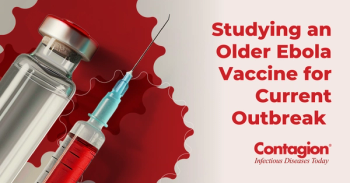
Investigators accessed longitudinal human data from ebola virus vaccination for signals of efficacy against the Bundibugyo species now surging in the Democratic Republic of Congo.
The total number of communities at critical risk of the mosquito-borne Eastern equine encephalitis stands at 28 statewide. Thirty-seven other towns are considered at high risk for EEE, while 126 are at moderate risk.
Public health officials have raised the risk level for Eastern equine encephalitis (EEE) to critical in 4 Massachusetts towns where the mosquito-borne virus was detected in 4 horses. The new distinction also comes after the first human EEE fatality of the year was reported earlier this week.
According to a
“As we head into the Labor Day weekend and the month of September people should not forget to bring and use an EPA-approved mosquito repellent for any outdoor activities,” Public Health Commissioner Monica Bharel, MD, MPH, said in the statement. “The peak time for transmission of mosquito-borne illness extends through September here in Massachusetts.”
A total of 4 human cases of EEE have been reported in Massachusetts so far this year, stemming from 7 equine cases. One fatality was reported in a Fairhaven woman who contracted the infection,
Without a specific antiviral treatment or vaccine to prevent infection, EEE proves fatal in 30% of cases, according to the
According to DPH, EEE occurs periodically in the state, with the most recent outbreaks reported from 2004-2006 and 2010-2012. During those 2 outbreak periods, there were 22 human cases of EEE infection.
Aerial mosquito spraying operations have been completed in Bristol, Plymouth, Middlesex, and Worcester counties as of this week.
“It remains critically important for people in communities at critical, high, and moderate risk for EEE to continue to take personal precautions against mosquito bites,” DHS said in a statement. “These steps include using EPA-approved bug spray, wearing long sleeves and pants outdoors to reduce exposed skin, and cancelling outdoor activities in the hours from dusk to dawn when mosquitoes are most active.”