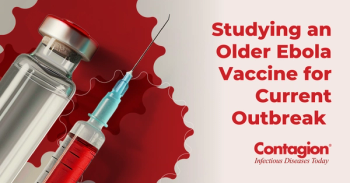
Investigators accessed longitudinal human data from ebola virus vaccination for signals of efficacy against the Bundibugyo species now surging in the Democratic Republic of Congo.
Today, the World Health Organization (WHO) held an emergency meeting to discuss the growing number of monkeypox infections. To date, there are now more than 100 confirmed or suspected cases across Europe.
The virus, usually found in western and central Africa, has been reported in Belgium, France, Germany, Italy, Portugal, Spain, Sweden, and the United Kingdom. Infections have also been found in the United States, Canada, and Australia.
The virus was first identified in monkeys, and usually results in mild illness, fever, rash, and signature bumpy, fluid-filled blisters. Monkeypox can be painful, and one strain of the virus can kill as many as 10% of infected people. However, the version currently circulating in England is mild and has a fatality rate of less than 1%. Most cases are expected to resolve within 2-4 weeks.
The virus typically spreads through animals in western or central Africa. Person-to-person contact is not as common, as monkeypox requires close contact with bodily fluids. The virus can also pass through clothing or linens from an infected person.
However, 7 of the 8 reported cases in England were in people who had not recently traveled to Africa. Health officials are unclear how people are catching the monkeypox virus, suggesting it may be spreading undetected through communities through a new route of transmission. “Exactly where and how they acquired their infections remains under urgent investigation,” said the UK Health Security Agency (UKHSA).
“What is even more bizarre is finding cases that appear to have acquired the infection via sexual contact,”
UKHSA and the US Centers for Disease Control and Prevention (CDC) reported that a “notable” proportion of the early cases were detected in gay and bisexual men, so these populations are advised to take extra caution.
The monkeypox outbreak is not expected to become a pandemic like COVID-19, as it is a self-limiting illness that does not spread nearly as easily as a respiratory infection. Additionally, the US Food and Drug Administration (FDA) approved the first monkeypox vaccine in 2019, and there are also other existing drugs and vaccines that can be deployed if necessary. According to WHO, smallpox vaccines may be up to 85% effective against monkeypox.
Experts are still advising caution, however, as the relative vastness of the spread is unusual for monkeypox. “This is the largest and most widespread outbreak of monkeypox ever seen in Europe,” said the medical division of Germany’s military.