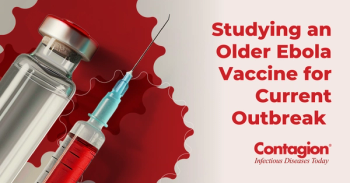
Investigators accessed longitudinal human data from ebola virus vaccination for signals of efficacy against the Bundibugyo species now surging in the Democratic Republic of Congo.
Two more states have reported hepatitis A outbreaks since our last update—here’s what you should know about them.
Since March 2017, several state and local heart departments across the country have been struggling with hepatitis A outbreaks.
Since our last
The Indiana State Department of Health (ISDH) identified an increase in hepatitis A cases in the southern region of the state, back in November 2017. Many of the cases are thought to be tied to the large outbreak in
As of May 11, 2018, the ISDH has
The ISDH noted that the genotype of 2 of the cases reported has matched up with ongoing outbreaks in Arizona, Kentucky, California, Michigan, and Utah. For this outbreak, transmission is thought to mainly be occurring from person-to-person through the use of injectable drugs, not contaminated food products.
In a past perspective piece, the Centers for Disease Control and Prevention reported that homeless individuals account for the majority of the cases involved in all the outbreaks, followed by injection and non-injection drug users. This, perhaps, is not so surprising as many of the environmental factors associated with
Meanwhile, most of the cases reported in West Virginia have been among drug users, homeless or transient individuals, those who have been recently incarcerated, and those who are also co-infected with hepatitis C. The West Virginia Bureau for Public Health has reported an increase in hepatitis A cases since March 2018.
As of May 11, 2018, the WV Bureau for Public Health has
“We are continuing to monitor the hepatitis A outbreak that is occurring in West Virginia and are assisting health departments in containing the outbreak,” Dr. Rahul Gupta, state health officer and commissioner of The West Virginia Department of Health and Human Resources (DHHR)’s Bureau for Public Health (BPH), said in a recent
He added that enhanced efforts are being made to work with local health officials in Kanawha and Putnam counties to strengthen outbreak response; these efforts include “embedding” the state epidemiologist at the Kanawha-Charleston Health Department to provide onsite assistance for outbreak investigation; the state epidemiologist will also be reporting back to the Bureau for Public Health regarding surveillance and control updates.
Of course, one of the best ways to quell an outbreak is to prevent new infections from happening in the first place by getting vaccinated against the virus. As such, the BPH is reminding the public to receive the vaccine, especially those who are at highest risk for infection. The CDC recommends that individuals receive 2 doses of the inactivated vaccine to achieve long-lasting protection; the doses should be administered 6 months apart.
In addition to vaccination, proper handwashing is also key to preventing hepatitis A. As such, the BPH recommends that individuals wash their hands with soap and water for 20 seconds after using the bathroom and before any food preparation.
“We are working with multiple partners including the homeless coalition and others to provide information specific to the populations they serve,” Dr. Gupta said. “Residents can be assured we will remain vigilant until the outbreak has been contained.”
For the most recent case counts associated with the ongoing