When you first walk into IDWeek at the Boston Convention Center, you immediately get a sense of how enormous this conference is. You witness the expanse of the exhibit hall laid out in front of you, as well as the hustle and bustle of infectious disease attendees moving back and forth between sessions, listening to ongoing conversations between old professional friends, and seeing the overflow from rooms as people try to get spots to listen in on the latest research or clinical strategies to deal with various infectious diseases.
Thousands of people are in attendance at IDWeek including clinicians, medical industry representatives, and other key infectious disease stakeholders who are there to participate in some of the hundreds of programs, abstracts, posters, and presentations.
In thinking about the enormity of the conference and putting it together, there are scores of people behind the scenes who work to make it a success. In fact, you could say there is a small army to coordinate such a conference.
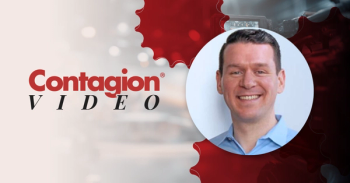
Heather Yun, MD, FACP, FIDS, knows exactly what that’s like in terms of executing with military precision. She is deputy commander for Medical Services at Brooke Army Medical Center, and professor of Medicine at the Uniformed Services University of the Health Sciences. Yun is also serving as the IDWeek Chair for the Infectious Diseases Society of America. With IDWeek, she knows it’s a collective team effort in putting together this year’s program.
“One person clearly cannot do this by themselves…So it's a lot of just keeping people organized, keeping people encouraged, providing a little bit of direction and support, but really being collaborative and, helping the team function at its best so that we can come up with the best program possible,” Yun said.
Yun feels honored to be serving as chair. “it's really an amazing privilege to be part of this group,” Yun said. “It's a support role for our incredible program committee and for our team of ID week staff that helped to put this meeting together.”
For the conference, she would like to see people come away optimistic and reenergized.
“I hope they will come away inspired,” Yun said. “I hope they will come away having learned something, having some vision for the future that they didn't have before. And I hope that they'll come away really encouraged about what their role is and the discipline and what they can contribute to patients and being an advocate for their community.”
War and AMR
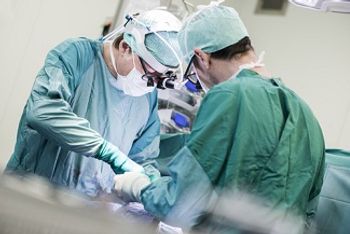
Outside of her duties of this year’s conference, one of her areas of interest and research is multidrug resistant infections for those suffered in wartime. With the ongoing war in the Ukraine and the newly formed war in Israel, Yun talks about the rise of antimicrobial resistance (AMR) in these unique environments.
“War has always been an incubator of disease, both as a result of battle injury, but also as a disease potentiator for endemic diseases as they take hold in uprooted populations that are also affected by famine and displacement,” Yun explained. “The multidrug resistant problem is really a complex one. These are health care associated infections and trauma patients really, and trauma patients have a lot of risk factors for infection.”
In a wide-ranging interview, Yun discusses IDWeek, AMR in wartime, and the threat of emerging infectious diseases.
Click here for more coverage of IDWeek 2023.