|Articles|June 4, 2021

NIH Launches Phase 1 Trial for Universal Influenza Vaccine

The government agency will be assessing the safety and immunogenicity of an investigational nanoparticle influenza vaccine.

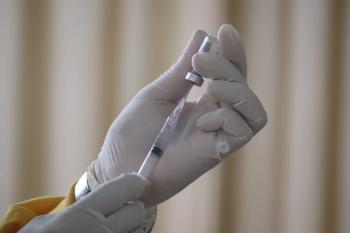
The National Institutes of Health (NIH) announced this week it had begun a phase 1 human trial studying a universal influenza vaccine, FluMos-v1. The vaccine was developed by the NIH’s National Institute of Allergy and Infectious Diseases (NIAID) and is designed to stimulate antibodies against multiple influenza virus strains by displaying part of the influenza virus hemagglutinin (HA) protein on self-assembling nanoparticle scaffolds.

Alicia T. Widge, MD, of NIAID’s the Vaccine Research Center (VRC), is the principal investigator of the NIAID-sponsored single-site trial.

“The health and economic burdens of influenza are substantial, and the world badly needs improved flu vaccines,” NIAID Director Anthony S. Fauci, MD, said. “I am encouraged by the great promise of the VRC nanoparticle vaccine candidate, which so far has performed very well in pre-clinical testing.”

The experimental nanoparticle FluMos-v1 vaccine is designed to elicit antibodies directed against the HA protein from four different virus strains, 2 influenza type A strains of H1 and H3 subtype and 2 influenza type B strains—which is similar to other commercially available vaccines. Where the investigational flu vaccine differs is that it displays multiple copies of each of the four HA types. The 20 HA epitopes arrayed in repeating patterns on the nanoparticle scaffolds sent a strong signal to the immune system and prompted a robust antibody response in animal models.

The clinical trial aims to enroll 35 participants, 15 of whom will receive a single intramuscular injection of an FDA-licensed, quadrivalent seasonal flu vaccine. Five participants will receive one 20-microgram (mcg) dose of the investigational vaccine by intramuscular injection. If there are no safety concerns detected at that dosage, an additional 15 volunteers will receive one 60-mcg dose of the investigational vaccine.

Other researchers are looking at potential influenza vaccines. For example, Cincinnati, Ohio-based Blue Water Vaccines is also working on developing a universal vaccine that will permanently protect against current and future influenza strains. Contagion interviewed Blue Water CEO Joseph Hernandez late last year about their investigational vaccine.

Related to this article

REMAP-CAP and the Tamiflu “Pre-Release”: A Set-Up for Disaster
Preliminary REMAP-CAP data suggesting oseltamivir may increase mortality in critically ill ICU influenza patients has sparked polarized reactions, but clinicians should await the full peer-reviewed manuscript before drawing broad conclusions, since the signal comes from a narrow, severely ill population and may reflect a therapeutic window effect rather than a blanket lack of efficacy.
GSK's mRNA Influenza Vaccine Moves to Phase 3 Trial
GSK will advance its investigational mRNA seasonal flu vaccine candidate, which targets both hemagglutinin and neuraminidase, into a phase 3 trial in September 2026 after the shot outperformed licensed flu vaccines in a phase 2 study.
Ebola and the Ongoing Tale of US Failures
In mid-May, as the world was still grappling with an unexpected hantavirus outbreak aboard a tourism vessel, news broke of an Ebola outbreak in the Ituri Province of the Democratic Republic of the Congo spanning at least 3 health zones, including Bunia, Rwampara, and Mongbwalu.
This Week's Top 5 Infectious Disease News Stories: September 12-September 18, 2026
In this week's top infectious disease stories, a Pennsylvania teen became the state's fourth measles death in weeks, the CDC reported a 17% summer surge in rabies exposure calls, new research revisited whether cefepime raises mortality risk, a multihospital review examined ceftriaxone's safety after state alerts, and examining Legionella pneumonia diagnostics.
Measles Update: September 18, 2026
The latest CDC numbers show a 5.37% increase of measles cases from week-to-week. In Pennsylvania, the fourth measles-related death was reported in 2026. Additionally, the CDC has made a change in the way it will report deaths.
CDC Responds to Surge in Rabies Exposures
A "Clinician Outreach" from the Centers for Disease Control and Prevention (CDC) in April anticipated an increase in rabies exposures, and the striking surge in case reports this summer prompted a recent health advisory alert from the federal agency.
New Diagnositics for Legionella Pneumonia May Streamline Care Continuum
Reported cases of Legionnaires’ disease have been on the rise for the past decade, and identifying Legionella bacteria requires specialized testing in the microbiology lab. Here is a clinical overview of Legionella bacteria, including required testing, treatment, and reporting to public health officials.