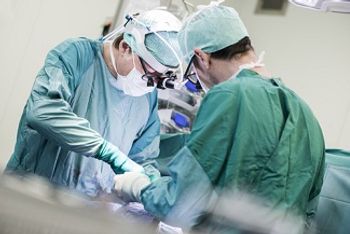
The surgical field is a sterile bubble of technique that seeks to reduce the potential for infection, but are we bringing a Trojan horse in during procedures?
Consider anterior cruciate ligament (ACL) reconstruction, which is one of the most common orthopedic surgeries in the United States. Roughly 100,000 ACL reconstructions are performed each year and while infections are rare, occurring in less than 1% of cases, they can cause severe morbidity and long-term complications. Surgical-site infections are not only a concern for patients and surgeons, but hospitals too, as a high rate of such infections can be tied to a financial penalty.
Contamination can occur from multiple sources, including gloves and gowns. But in new research published in the Orthopaedic Journal of Sports Medicine, investigators sought to evaluate the potential for sterile surgical pens to become contaminated during ACL reconstructions and whether this could lead to a surgical-site infection.
Although sterile surgical pens are used to mark the skin site for surgery prior to incision, in the case of ACL reconstruction the pen is also used to mark the graft (replacement tissue/ligament) during preparation. Investigators in this case wondered if it was possible for the pen to become contaminated after marking the patient’s skin and thus contaminating the hamstring graft.
Prior to the procedure, patient skin is cleaned with the standard 2% chlorhexidine gluconate cloths in pre-op, and then a surgical solution is used to clean the skin immediately prior to the procedure starting. These are normal pre-operative practices, and the pen is commonly used to mark the patient’s skin following the cleansing practices that should remove microbial contamination. Therefore, the sterile pen should remain free from microbial contamination.
But investigators hypothesized that the pens were becoming contaminated between uses. For the study, the team placed the pen tip into a sterile culture and sent it to a laboratory immediately after it was used to mark the skin site.
During this test, new pens were provided to mark the graft. The investigators also obtained positive and negative controls. Positive controls were pens collected before the application of the surgical solution and negative controls were unopened pens handled directly to the lab. Microbial testing was conducted on 22 pens collected from patients undergoing ACL reconstruction between March 2013 and 2014.
In 3 of the pens tested following use on cleansed skin, there was microbial growth, indicating that these pens can act as a fomite for disease transmission. In all 3 cases, the pens grew Staphylococcus species and one also grew a species of Bacillus.
All the controls­—6 of the 12 positive ones—showed growth while none of the 8 negative controls had growth.
Finding that 3 of the surgical pens had microbial growth after their use on skin that was supposed to be sterile indicates that not only is the current decontamination process not effective, but it poses a significant risk for surgical-site infections.
The investigators discussed the potential for grafts to become contaminated during the preparation and although the source of infection could be the graft, this study sheds light on a potential source of contamination that was previously thought to be sterile.
Ultimately a 15% rate of contamination is startling and underscores the need for surgeons performing ACL reconstruction to dispose of the surgical marking pen after its initial use in skin marking. Simply put, it is more cost-effective to use multiple surgical pens in ACL reconstruction in order to prevent the costs associated with treating surgical-site infections associated with repeated use of contaminated pens.