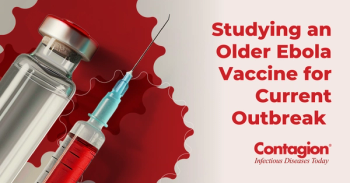
Investigators accessed longitudinal human data from ebola virus vaccination for signals of efficacy against the Bundibugyo species now surging in the Democratic Republic of Congo.
New information suggests a few more cases have surfaced in the United States, pending CDC confirmation.
Update: Moderna tweeted the following: "Underscoring this commitment, and as
Last night, the Centers for Disease Control and Prevention (CDC) said there was 1 confirmed case of monkeypox in Massachusetts, 6 cases of orthopox including the following states: 1 in New York, 1 in Washington state, 2 in Florida and 2 in Utah. The monkeypox virus is an enveloped double-stranded DNA virus that belongs to the Orthopoxvirus genus of the Poxviridae family. Outside labs can test for the orthopox virus and monkeypox diagnosis is confirmed at the CDC's facility.
First Europe, Now Here
Worldwide, the World Health Organization said there have been 200 confirmed or suspected cases of monkeypox. Mostly in non-endemic countries. Monkeypox is a viral zoonotic disease that occurs primarily in tropical rainforest areas of central and west Africa and is occasionally exported to other regions.
This most recent outbreak has been in a few countires in Europe and at least one case in the US, the aforementioned Massachusetts case,
The
Last year, the United States had 2 confirmed cases in the US with travelers coming from West Africa.
Identifying the Virus
In a recent statement, CDC said it was tracking clusters of monkeypox in countries that do not normally report monkeypox. Although the agency is not clear how people in those clusters were exposed to the virus, cases have included people who self-identify as men who have sex with men.
The CDC said it is urging US providers to be alert for patients who have rash illnesses
“Many of these global reports of monkeypox cases are occurring within sexual networks. However, healthcare providers should be alert to any rash that has features typical of monkeypox. We’re asking the public to contact their healthcare provider if they have a new rash and are concerned about monkeypox,” said Inger Damon, MD, PhD, director of CDC’s Division of High-Consequence Pathogens and Pathology, where the agency’s poxvirus research is based.
Vaccine Availability
One vaccine has been approved for prevention of monkeypox. The US does have a stockpile of available monkeypox vaccines. And for those who have had smallpox vaccines these can provide protection against monkeypox as well.
As this is an evolving story, check back on Contagion for news updates.