Lauri A. Hicks, DO, captain, US Public Health Service, director, Office of Antibiotic Stewardship, medical director, Get Smart: Know When Antibiotics Work, Division of Healthcare Quality Promotion, Centers for Disease Control and Prevention, explains how antibiotics can be harmful if they are not used appropriately.
Interview Transcript (slightly modified for readability)
“We know that the public has heard a lot of messages about the problem of antibiotic resistance. We’ve been seeing a lot in the media about superbugs, about the potential for having infections that are not able to be treated. We need to continue to get those messages out there, because obviously that’s one of our biggest concerns: that we will not have the tools we need to treat infections.
However, what I think is really important is that when someone is thinking, ‘I think I might have a cold and I need to go to the doctor and I’m interested in seeing if an antibiotic would work for this infection.’ I think the most important thing to realize at that stage is, if you don’t have a serious infection or a bacterial infection that requires an antibiotic, antibiotics can actually do more harm than good.
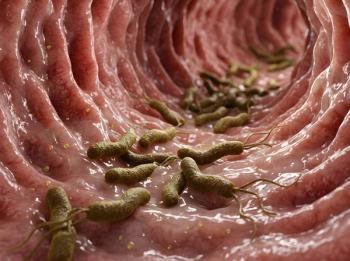
I think for a long time there’s been a perception that antibiotics are harmless, that we can take them just like we do like a multi-vitamin and it will make us better. We need to be really cognizant and really understand that antibiotics have the potential not only to lead to adverse events, like the rashes and the diarrheas, but the more serious things that I am really much more concerned about, that are happening more frequently in the community. For example, Clostridium difficile infections, which we’ve talked about as a potentially deadly diarrhea. We’re seeing the rate of these infections increase over time and we’re really concerned that if we don’t really get really the message out there—that there’s a potential downside to antibiotics—there will continue to be this patient demand that drives unnecessary antibiotic use.”