

News|Videos|December 12, 2024
COVID-19 Therapy Roundtable: Addressing Inpatient Clinical Care
Author(s)John Parkinson, Joshua Fitch

In this week's episode, the panel discusses therapies and care involving inpatients, including mechanical ventilation, extracorporeal membrane oxygenation (ECMO), and remdesivir.
Advertisement
According to the Centers for Disease Control and Prevention, the week ending November 30, 2024, there has been a rate of 0.8 hospitalizations per 100,000 people, and this shows a good downward trend over the last few weeks.1
Although the number of hospitalizations have decreased significantly since the beginning of the pandemic, there are waves where incidence rates increase and a number of people who are contracting severe cases of COVID-19 need to be hospitalized.
During the height of the pandemic and before the development of vaccines and therapies, there were therapeutic limitations and patients could be put on mechanical ventilation or extracorporeal membrane oxygenation (ECMO).
COVID-19 Therapy Roundtable Panel
- Tina Tan, MD, professor of Pediatrics, Feinberg School of Medicine, Northwestern University
- Scott Roberts, MD, associate medical director of Infection Prevention, Yale School of Medicine
- James Wilson, DO, FACP, FAWM, CTropMed, critical care physician in private practice
- Michael Curulewski, PharmD, BCPS, BCIDP, BCGP infectious diseases and antimicrobial stewardship pharmacist, Endeavor health, Northwest Community Hospital
ECMO was utilized more frequently in a time when there was not other treatments. And in some select cases, roundtable panelist James Wilson, DO, FACP, FAWM, CTropMed, says ECMO did show some benefit, and there might be some select situations where it might be warranted but overall he says treatment protocols have changed considerably since 2020.
“If they're breathing at 40 times a minute for more than an hour, you're going to have to do it [ECMO],” said Wilson. “But now we have modalities to treat those patients.”
One of the treatments that emerged was remdesivir for inpatients with severe COVID-19.
“I triage COVID between requiring oxygen and not requiring oxygen,” said Scott Roberts, MD, associate medical director of Infection Prevention, Yale School of Medicine. “And then once you become severe enough to require it, we really start remdesivir as soon as we can in the inpatient setting. And we know from many studies at this point there are reductions in mortality in those who do receive remdesivir. We use it for all really severe patients.”
This is episode 2 of our 4-part series. Check back for future episodes.
Reference
1.COVID Tracker. CDC. Accessed December 10, 2024.
https://covid.cdc.gov/covid-data-tracker/#covidnet-hospitalization-network
Advertisement
Related to this article

In the first episode of our new series looking at the food safety network, Lynette Johnston, PhD, offers insights into how the federal government surveillance infrastructure operates and how epidemiologists serve as food detectives in determining bacterial pathogens and potential foodborne outbreaks.
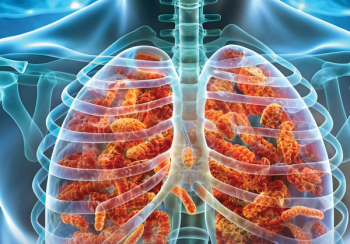
Reported cases of Legionnaires’ disease have been on the rise for the past decade, and identifying Legionella bacteria requires specialized testing in the microbiology lab. Here is a clinical overview of Legionella bacteria, including required testing, treatment, and reporting to public health officials.

The 18-year old resident of the state suffered from acute disseminated encephalomyelitis. Pennsylvania numbers are surging with some of the highest state totals of measles cases in the country.

In its second disease cluster this summer, city officials are cleaning building towers in the South Bronx amidst an ongoing investigation and are rolling out measures to prevent future Legionnaires' cases.

The death was reported in Jefferson County where the coroner released a statement announcing it was in an unvaccinated woman.

Food expert Lynette Johnston, PhD, provides some context around the ongoing outbreak, discusses prevention, and compares 2026 food recalls with previous years.

The Peggy Lillis Foundation will host its 17th Annual Changing the Odds Gala this month in New York City, and it will include a casino, fellowship amongst the C diff community, and an award ceremony honoring a physician-scientist, philanthropist, a researcher, and a patient advocate for their contributions to C difficile awareness, treatment, and prevention.

Preliminary REMAP-CAP data suggesting oseltamivir may increase mortality in critically ill ICU influenza patients has sparked polarized reactions, but clinicians should await the full peer-reviewed manuscript before drawing broad conclusions, since the signal comes from a narrow, severely ill population and may reflect a therapeutic window effect rather than a blanket lack of efficacy.
Advertisement
Advertisement
Trending on Contagion Live
1
Measles Update: September 25, 2026
2
US Company Recalls Thousands of Pounds of Uninspected Meat
3
Enivronmental Stewardship: The Role of Antimicrobials in Climate Change
4
Carbapenem-Sparing Therapy for ESBL Bacteremia: New Trials, Old Questions
5