Healthcare practitioners have longed encouraged new mothers to breastfeed their infants because breast milk has been shown to decrease infants’ risk of ear infections, asthma, and lower type 2 diabetes, among other conditions. Now, the results of a new study are providing more support for this practice, showing that the sugars in human breast milk can help protect babies from bacterial infections.
The proteins in human breast milk—which is a combination of proteins, fats, and sugars—have long been studied for their antibacterial properties; however, Steven Townsend, PhD, assistant professor, Chemistry, Vanderbilt University, and his team of chemists and doctors, decided to study the sugars. Dr. Townsend explained why, in a press release, “For most of the last century, biochemists have argued that proteins are most important and sugars are an afterthought. Most people have bought into that argument, even though there's no data to support it. Far less is known about the function of sugars and, as a trained glycoprotein chemist, I wanted to explore their role.”
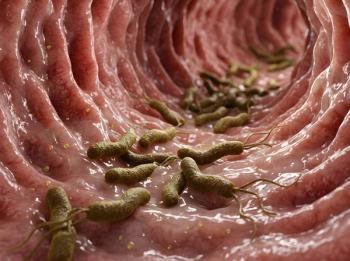
For the pilot study, the researchers collected 5 samples of oligosaccharides, human milk carbohydrates, from several different donors. They profiled the samples using “a mass spectrometry technique that can identify thousands of large biomolecules simultaneously,” according to the press release. Afterwards, they added the samples to cultures of Group B strep bacteria—the leading cause of infections in newborns worldwide—and viewed the results under a microscope. Using this technique, the researchers found that the oligosaccharides are able to kill the bacteria as well as break down their biofilms. More specifically, they found that, “one sample nearly killed an entire strep colony,” one sample was moderately effective against the bacteria, and, “the remaining three samples exhibited a lower level of activity.” In addition, preliminary results from a follow-up study of 24 other samples has shown that, “two broke down the bacterial biofilms and killed the bacteria, for broke down the biofilms but did not kill the bacteria, and two killed the bacteria without breaking down the biofilms.”
When speaking about the results of the studies in the press release, Dr. Townsend said, “Our results show that these sugars have a one-two punch. First, they sensitize the target bacteria and then they kill them. Biologists sometimes call this 'synthetic lethality' and there is a major push to develop new antimicrobial drugs with this capability.”
The researchers were also able to show that, “sugars' ability to break down biofilms can also enhance the effectiveness of the other antimicrobial agents that breast milk contains, by dosing strep cultures with a mixture of milk sugars and antimicrobial peptides from human saliva.”
Additional follow-up studies have shown that the sugars in human breastmilk also show antimicrobial activity against 2 of the 6 ESKAPE pathogens, which are Enterococcus faecium, Staphylococcus aureus, Klebsiella pneumoniae, Acinetobacter baumannii, Pseudomonas aeruginosa, and the Enterobacter species, according to the press release. These pathogens are the leading cause of nosocomial infections around the world.
Speaking about the implications of this research in the press release, Dr. Townsend remarked, “This is the first example of generalized, antimicrobial activity on the part of the carbohydrates in human milk. One of the remarkable properties of these compounds is that they are clearly non-toxic, unlike most antibiotics."
For future research, Dr. Townsend will be working with his, “colleagues in Vanderbilt's Mass Spectrometry Research Center to identify the specific types of carbohydrate molecules responsible for the antibacterial effects they have discovered.”
The results of the study were presented at the annual American Chemical Society meeting in Washington, DC, on August 20, 2017.