Climate change is usually attributed to the burning of fossil fuels; however, there is a general consensus that “the microbial world constitutes the life support system of the biosphere.”1 It is bacteria and other microbes that, millions of years ago, created the unique atmosphere on Earth able to support higher life-forms, such as plants and animals. In fact, the microbes are the primary entities responsible for the biogeochemical cycles, including water, carbon, and nitrogen.1-3 If the microbial world is harmed and altered substantially, it will lead to changes in the atmosphere and climate. The widespread use of antimicrobials, such as antibiotics, antifungals, antivirals, antiseptics, and disinfectants, is indeed causing such effects. A recent study4 estimated that one course of antibiotics, by impacting microbial soil environments, results in the release of 9.84 tonnes of CO2 from soil storage, the equivalent of a car driving around Earth 1.5 times. This same study also found that over 7% of the current amounts of CO2 in the atmosphere could be removed by avoiding the use of antibiotics. Microbes are everywhere, in soil, waterways, air, and on all surfaces, eg, rocks, walls, and floors. In living organisms, they usually reside both on and in surfaces in contact with the surroundings, eg, the skin, gut, and respiratory systems in mammals, and leaves and stems in plants. They typically organize themselves into communities, microbiomes, composed of a large variety of microbes, including bacteria, archaea, fungi, and viruses. These microbiomes are highly variable as they are characterized by all the microbial species they comprise, and they are constantly changing in response to external conditions. In these complex, collaborative communities, individual species often provide metabolites needed by other members or by their host, as exemplified in the gut-brain axis in mammals5,6 and the nitrogen conversion pathway in soil.
The effectiveness of these vital processes depends on a balanced interspecies composition and high species diversity within the microbiome. Antimicrobials disrupt these microbiomes, changing the species composition and virulence level, and thereby the very function of the microbiome. It has been the general assumption that the use of antimicrobials would sterilize the matter, leaving nothing behind and causing no lasting harm. However, new data show that microbes have several defense systems against antimicrobials, which, in many cases, leave them ineffective. This explains why health conditions involving infections often fail to respond to antimicrobials and why our efforts to control the level of infective agents, in, for example, hospital wards, fail. The aim of this article is to provide a short introduction to these defense systems and to demonstrate that we need to integrate the diversified and ingenious ways in which microbes respond to antimicrobials into our health care approaches. Given that antimicrobials have developed and refined their defenses over millions of years, we are but novices, in comparison, lacking experience, speed, and a deeper understanding.
Bacterial Stages and Responses to Antimicrobial Stressors
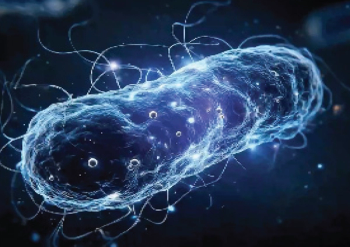
Bacteria are typically viewed as single organisms floating aimlessly around, but this is a highly simplistic view. Bacteria have 2 main life cycle-stages (Table): the planktonic, in which they are unattached, and the more common sessile state, in which they attach to a substrate and reside as part of a microbiome inside a collective biofilm, ie, a gelatinous layer created by the microbes, which acts like a shield to protect them, against, for example, antimicrobials. Biofilm usually has a negative connotation, but bacteria living naturally on and in our skin form biofilm, which offers us protection.7
Stressful conditions can induce bacteria to enter stages in which they can tolerate extreme environmental conditions. One is the persister cell, which occurs when the colony is exposed to stress, eg, antimicrobials. Here, bacteria in a certain stage of their development are induced to enter a prolonged low-metabolic state, which allows them to survive the stress.8,9 Once the stress is gone, they will return to their normal development. An example is the recurrence of an infection once the use of antimicrobials has ended. The spore is another stage in which the bacteria develop a protective shell and enter an inactive metabolic state, in which they can survive for thousands of years under extreme conditions.10 Bacteria can also release mobile genetic elements (MGEs), which are short sequences of DNA that, for example, in response to external conditions, can rapidly transfer traits horizontally between bacteria without the necessity of cell division.11-13 Antimicrobial-resistant genes (ARGs) are a typical example of the traits carried by MGEs. This transfer can happen via cell-cell contact, or MGEs can be released into the environment and be taken up and used by other bacteria. Finally, when the cell wall breaks after a bacterium has died, MGEs and core DNA present inside the bacterium are released into the environment. This now extracellular DNA (eDNA) can remain viable for at least 3 months, during which it can be picked up, used, and replicated by other microbes.14 Bacteria respond to antimicrobials by activating their defense systems. This response includes increased development and sharing of ARGs, within and outside the microbiome. 14–17 ARGs and other genetic solutions that may benefit the bacteria can therefore spread swiftly, globally, and across microbial species. Additionally, genes affecting virulence are frequently positioned close to the ARGs on the MGEs, meaning that the spread of resistance will typically be accompanied by increased virulence, including accelerated mobility, and the ability to cross anatomical barriers more easily and to invade different tissue types.
Challenges in Identifying the Infective Agent
The most used diagnostic approach for bacterial infections is culturing, but this analysis has a number of downsides (Table). The technique only focuses on a small set of preselected bacteria. Also, it is only suitable for bacteria in the planktonic state whereas the more common sessile bacteria enclosed in biofilm and anaerobic strains are only sampled to a limited extent. Furthermore, culturing is not effective for identifying persister cells, spores, MGEs or eDNA. Using proper sampling techniques and gene-based analysis methods, it is possible to identify all the strains present, but this is very rarely done in clinic. Therefore, in practice, we are unaware of what microbes are present and the defense responses we trigger. Internal bodily regions are normally sterile, which means that the presence of a microbe can likely be linked to the infection. However, the majority of infections occur in surfaces in direct or indirect contact with the surroundings, and they are generally caused by commensals, ie, microbes that inhabit the body’s natural microbiomes, such as the gut or skin.
Over a thousand different species are typically present, and here infection is when the compositional balance of the microbiomes is severely disrupted. This presents a very different scenario from an internal infection, as they are typically polymicrobial, and demonstrating the presence or abundance of a specific species does not prove it to be the species causing the infection; it can easily be a desirable response by the commensals, aimed at restoring balance. Identifying the infective agent requires understanding the role of individual species and their level of abundance in the infected area under “normal” noninfection conditions, which is practically never the case.
Impact of Antimicrobials on the Microbes, Infections, Patients, and Earth
Using antimicrobials to treat an infection will, assuming the infective agent is not resistant, be able to impact bacteria in the planktonic stage. However, once the infection has become sessile and established within a protective biofilm adhering to the inside of a vessel or an organ, antimicrobials will have minimal effect, and antimicrobials will not affect persister cells, spores, MGEs, or eDNA (Table). In internal body regions, the use of antibiotics will, when combined with the actions of the immune system, be able to treat many acute infections, because there will typically be very few infecting species. However, antibiotics are ineffective against chronic adhering infections such as bone infection and endocarditis. They will change the infection but not eliminate it. As the commensal community populating the body microbiomes will virtually always include at least one, and often more, resistant species, the use of antimicrobials will selectively support the resistant strains by harming the sensitive strains, thereby upsetting the microbial equilibrium established by the body. They typically induce an increased level of virulence, exacerbating the condition long-term and reinforcing the hardiness and robustness against antimicrobials. Antimicrobials, therefore, change the infection on microbiome- holding surfaces but do not eliminate it. Antibiotics are excreted largely unmetabolized, and most antimicrobials are highly stable compounds.18 Around 50% typically escape water treatment plants and travel the water cycle, ie, from rivers, to oceans, to clouds, and return around the Earth as precipitation.
Antimicrobials remaining in the water treatment plants contribute to the development and spread of antimicrobial resistance.19 These microbes will, eventually, release their antimicrobial resistance capabilities as eDNA into the extracellular realm for other microbes to pick up and use, for instance, 3 months later, thousands of miles downstream. Studies of the clearance of antimicrobial compounds in nature have usually focused on measuring their concentration in the water phase. However, data show that they often bind to organic material, where they remain active, and this typically extends their half-life considerably. Most studies of the speed at which antimicrobials are cleared from aquatic bodies, therefore, strongly underestimate their true impact.20 Studies are increasingly showing long-term impacts of antimicrobials. In humans, epidemiological studies have found that antimicrobials are associated with increased prevalence of cancer, diabetes, asthma, obesity, immune dysfunction, depression, miscarriages, birth defects, and various developmental complications.5,6,21 In nature, antimicrobials, by damaging the microbial systems, cause deforestation and desertification by changing the structure of the soil. They further contribute to climate change by causing the release of carbon from soil storage22,23 and reducing the levels of CO2 absorbed from the atmosphere into the oceans by 50% due to their effects on the microbial communities inhabiting the water-air interface.3,24-28
Using Antimicrobials Optimally
The situation is, therefore, that microbes highly effectively and rapidly develop and share defenses against our antimicrobial compounds, and that these treatments and our sterilization approaches themselves lead to long-term complications in humans and animals, as well as to environmental damage. This strongly emphasizes the importance of limiting their use to conditions where they are demonstrably effective and beneficial. Antimicrobials are frequently used to treat infections on microbiome-holding surfaces, eg, the skin and gut, and for disinfection. However, studies show that the presence of MGEs, which carry ARGs and virulence factors, is higher on surfaces that are more frequently disinfected with antimicrobials,29 showing that antimicrobial compounds, as expected, increase the hostility of the environment. This advocates for using nonantimicrobial approaches on skin and in wards, intensive care units, and other surfaces where sterility is unachievable30 ie, using soap and water, to allow the area to establish a stable, diverse microbial environment that will be less aggressive.
Environmental Stewardship
Overall, the microbial world is stewarding Earth’s air, water, and land resources to our benefit, and when we kill the microbes and disrupt their natural communities, we change vital biogeochemical cycles, thereby damaging the Earth. The microbes have had millions of years to develop and fine-tune their defense mechanisms. They hold vast advantages in speed and agility in raising their offense and defense capabilities. As we are learning, these capabilities are highly advanced and, when provoked, eg, by our synthetic antimicrobials, the microbes rapidly identify solutions. For that reason, antimicrobials —both antibiotics and antiseptics—should only be used when no alternative solution is available and where they demonstrably provide significant clinical benefit, in which case the one with the shortest total active half-life, when also considering metabolites, should be prioritized.
Health care is only one of many sectors with an extensive use of antimicrobials in which such rules based on demonstrable necessity need to be applied. There are other sectors in which antimicrobials are used for basically nonessential purposes, eg, for textiles, clothing, paints, soaps, sanitation, plastics, feed, etc, and by banning their use, except where justified, it will be possible to assist the Earth to recover without a negative impact on our ways of living.
References
1.Cavicchioli R, Ripple WJ, Timmis KN, et al. Scientists’ warning to humanity: microorganisms and climate change. Nat Rev Microbiol. 2019;17(9):569–586. doi:10.1038/s41579-019-0222-5
2.Clokie MR, Millard AD, Letarov AV, Heaphy S. Phages in nature. Bacteriophage. 2011;1(1):31–45. doi:10.4161/bact.1.1.14942
3.Field CB, Behrenfeld MJ, Randerson JT, Falkowski P. Primary production of the biosphere: integrating terrestrial and oceanic components. Science. 1998;281(5374):237–240. doi:10.1126/science.281.5374.237
4.Sams-Dodd J, Sams-Dodd F. The contribution of antimicrobials and antimicrobial resistance to climate change and a possible way to reverse it whilst still offering high quality healthcare—a conceptual analysis. Front Public Health. 2025;13:1644086. doi:10.3389/fpubh.2025.1644086
5.Ahn J, Hayes RB. Environmental influences on the human microbiome and implications for noncommunicable disease. Annu Rev Public Health. 2021;42:277–292. doi:10.1146/annurev-publhealth-012420-105020
6.Njotto LL, Simin J, Fornes R, et al. Maternal and early-life exposure to antibiotics and the risk of autism and attention-deficit hyperactivity disorder in childhood: a Swedish population-based cohort study. Drug Saf. 2023;46(5):467–478. doi:10.1007/s40264-023-01297-1
7.Ring HC, Bay L, Kallenbach K, et al. Normal skin microbiota is altered in pre-clinical hidradenitis suppurativa. Acta Derm Venereol. 2017;97(2):208-213. doi:10.2340/00015555-2503
8.Kunnath AP, Suodha Suoodh M, Chellappan DK, Chellian J, Palaniveloo K. Bacterial persister cells and development of antibiotic resistance in chronic infections: an update. Br J Biomed Sci. 2024;81:12958. doi:10.3389/bjbs.2024.12958
9.Rahman KMT, Amaratunga R, Butzin XY, Singh A, Hossain T, Butzin NC. Rethinking dormancy: antibiotic persisters are metabolically active, non-growing cells. Int J Antimicrob Agents. 2025;65(1):107386. doi:10.1016/j.ijantimicag.2024.107386
10.Setlow P. Spores of Bacillus subtilis: their resistance to and killing by radiation, heat and chemicals. J Appl Microbiol. 2006;101(3):514–525. doi:10.1111/j.1365-2672.2005.02736.x
11.Krüger GI, Pardo-Esté C, Zepeda P, et al. Mobile genetic elements drive the multidrug resistance and spread of Salmonella serotypes along a poultry meat production line. Front Microbiol. 2023;14:1072793. doi:10.3389/fmicb.2023.1072793
12.Murray CJL, Ikuta KS, Sharara F, et al. Global burden of bacterial antimicrobial resistance in 2019: a systematic analysis. Lancet. 2022;399(10325):629–655. doi:10.1016/S0140-6736(21)02724-0
13.Nkemngong C, Teska P. Biofilms, mobile genetic elements and the persistence of pathogens on environmental surfaces in healthcare and food processing environments. Front Microbiol. 2024;15:1405428. doi:10.3389/fmicb.2024.1405428
14.Kittredge HA, Dougherty KM, Evans SE. Dead but not forgotten: how extracellular DNA, moisture, and space modulate the horizontal transfer of extracellular antibiotic resistance genes in soil. Appl Environ Microbiol. 2022;88(7):e0228021. doi:10.1128/aem.02280-21
15.Evans DR, Griffith MP, Sundermann AJ, et al. Systematic detection of horizontal gene transfer across genera among multidrug-resistant bacteria in a single hospital. eLife. 2020;9:e53886. doi:10.7554/eLife.53886
16.Romanowski G, Lorenz MG, Sayler G, Wackernagel W. Persistence of free plasmid DNA in soil monitored by various methods, including a transformation assay. Appl Environ Microbiol. 1992;58(9):3012–3019. doi:10.1128/aem.58.9.3012-3019.1992
17.Walworth NG, Zakem EJ, Dunne JP, Collins S, Levine NM. Microbial evolutionary strategies in a dynamic ocean. Proc Natl Acad Sci USA. 2020;117(11):5943–5948. doi:10.1073/pnas.1919332117
18.Wepking C, Badgley B, Barrett JE, et al. Prolonged exposure to manure from livestock‐administered antibiotics decreases ecosystem carbon‐use efficiency and alters nitrogen cycling. Ecol Lett. 2019;22(12):2067–2076. doi:10.1111/ele.13390
19.Córdova-Kreylos AL, Scow KM. Effects of ciprofloxacin on salt marsh sediment microbial communities. ISME J. 2007;1(7):585–595. doi:10.1038/ismej.2007.71
20.Belden JB, Maul JD, Lydy MJ. Partitioning and photodegradation of ciprofloxacin in aqueous systems in the presence of organic matter. Chemosphere. 2007;66(8):1390–1395. doi:10.1016/j.chemosphere.2006.09.032
21.Patangia DV, Anthony Ryan C, Dempsey E, Paul Ross R, Stanton C. Impact of antibiotics on the human microbiome and consequences for host health. MicrobiologyOpen. 2022;11(1):e1260. doi:10.1002/mbo3.1260
22.Bollinger E, Zubrod JP, Lai FY, et al. Antibiotics as a silent driver of climate change? a case study investigating methane production in freshwater sediments. Ecotoxicol Environ Safety. 2021;228:113025. doi:10.1016/j.ecoenv.2021.113025
23.Nissen TV. Effects of antibiotics on carbon dioxide production in soil. Nature. 1954;174(4422):226–227. doi:10.1038/174226a0
24.Lu J, Shu Y, Zhang H, et al. The landscape of global ocean microbiome: from bacterioplankton to biofilms. Int J Mol Sci. 2023;24(7):6491. doi:10.3390/ijms24076491
25.Mahmoudnia A. The role of PFAS in unsettling ocean carbon sequestration. Environ Monit Assess. 2023;195(2):310. doi:10.1007/s10661-023-10912-8
26.Pereira R, Ashton I, Sabbaghzadeh B, Shutler JD, Upstill-Goddard RC. Reduced air–sea CO2 exchange in the Atlantic Ocean due to biological surfactants. Nat Geosci. 2018;11:492-496. doi:10.1038/s41561-018-0136-2
27.Salter ME, Upstill-Goddard RC, Nightingale PD, et al. Impact of an artificial surfactant release on air-sea gas fluxes during Deep Ocean Gas Exchange Experiment II. J Geophys Res. 2011;116:C111016. doi:10.1029/2011JC007023
28.Wurl O, Stolle C, Van Thuoc C, The Thu P, Mari X. Biofilm-like properties of the sea surface and predicted effects on air–sea CO2 exchange. Prog Oceanography. 2016;144:15–24. doi:10.1016/j.pocean.2016.03.002
29.Ye S, Peng S, Wang X, et al. Microbial community structure and resistome dynamics on elevator buttons in response to surface disinfection practices. Front Public Health. 2025;13:1593114. doi:10.3389/fpubh.2025.1593114
30.Gan Y, Kurisu F, Simazaki D, et al. Unveiling significant regrowth and potential risk of nontuberculous mycobacteria in hospital water supply system. Water Res. 2025;275:123188. doi:10.1016/j.watres.2025.123188
31.Molina-Menor E, Carlotto N, Vidal-Verdú À, Pérez-Ferriols A, Pérez-Pastor G, Porcar M. Ecology and resistance to UV light and antibiotics of microbial communities on UV cabins in the dermatology service of a Spanish hospital. Sci Rep. 2023;13(1):14547. doi:10.1038/s41598-023-40996-8
32.Niu H, Gu J, Zhang Y. Bacterial persisters: molecular mechanisms and therapeutic development. Signal Transduct Target Ther. 2024;9(1):174. doi:10.1038/s41392-024-01866-5
33.Pu Y, Zhao Z, Li Y, et al. Enhanced efflux activity facilitates drug tolerance in dormant bacterial cells. Mol Cell. 2016;62(2):284–294. doi:10.1016/j.molcel.2016.03.035
34.Windels EM, Michiels JE, Fauvart M, Wenseleers T, Van Den Bergh B, Michiels J. Bacterial persistence promotes the evolution of antibiotic resistance by increasing survival and mutation rates. ISME J. 2019;13(5):1239–1251. doi:10.1038/s41396-019-0344-9
35.Cano RJ, Borucki MK. Revival and identification of bacterial spores in 25- to 40-million-year-old Dominican amber. Science. 1995;268(5213):1060–1064. doi:10.1126/science.7538699
36.Vos M, Buckling A, Kuijper B, et al. Why do mobile genetic elements transfer DNA of their hosts? Trends Genet. 2024;40(11):927–938. doi:10.1016/j.tig.2024.07.008
37.Berendsen EM, Boekhorst J, Kuipers OP, Wells-Bennik MHJ. A mobile genetic element profoundly increases heat resistance of bacterial spores. ISME J. 2016;10(11):2633–2642. doi:10.1038/ismej.2016.59
38.Nilsson M, De Maeyer H, Allen M. Evaluation of different cleaning strategies for removal of contaminating DNA molecules. Genes (Basel). 2022;13(1):162. doi:10.3390/genes13010162
39.Calderón-Franco D, Lin Q, van Loosdrecht MCM, Abbas B, Weissbrodt DG. Anticipating xenogenic pollution at the source: impact of sterilizations on DNA release from microbial cultures. Front Bioeng Biotechnol. 2020;8:171. doi:10.3389/fbioe.2020.00171
40.Liu HY, Prentice EL, Webber MA. Mechanisms of antimicrobial resistance in biofilms. NPJ Antimicrob Resist. 2024;2(1):27. doi:10.1038/s44259-024-00046-3