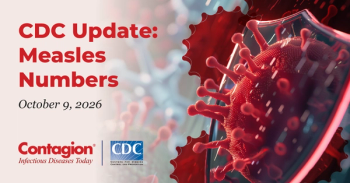
The latest CDC numbers show a 5.0% increase of measles cases from week-to-week. The US total reached 4080 confirmed cases, 78% above all of 2025.
The first participants were vaccinated in the study with Pfizer’s respiratory syncytial virus (RSV) investigational vaccine candidate in adults ages 60 or older.
Pfizer recently announced it had begun its phase 3 clinical trial, RENOIR (RSV vaccine Efficacy study iNOlder adults Immunized against RSV disease), which was designed to evaluate the efficacy, immunogenicity, and safety of a single dose of its RSV bivalent prefusion F subunit investigational vaccine candidate, RSVpreF.
The vaccine is being studied in a global, randomized, double-blind, placebo-controlled study that expects to enroll approximately 30,000 adults 60 years and older. The study will assess safety and efficacy for the prevention of moderate to severe lower respiratory tract illness (msLRTI-RSV) during the first RSV season.
“RSV is a significant cause of severe respiratory disease in older adults, and it can cause disability and death. There is an important unmet medical need for an effective vaccine that can help protect older adults against this highly-contagious disease,” Kathrin U. Jansen, PhD, senior vice president and head of Vaccine Research & Development, Pfizer, said. “The start of this phase 3 study is an important step forward towards our goal of comprehensive immunization against RSV disease, which includes developing a potential first vaccine to help prevent RSV disease in adults as well as the ongoing efforts to help protect infants through maternal immunization, subject to regulatory approval of the candidate vaccine.”
The Centers for Disease Control and Prevention (CDC) states that an estimated 177,000 older adults are hospitalized and 14,000 of them die in the United States annually due to RSV.
Those older adults who are most at risk for severe RSV are those who are 65 years and older; adults who have chronic heart or lung disease; and adults with weakened immune systems. RSV in adults will look like cold symptoms, but can lead to more serious symptoms including pneumonia, severe symptoms for people with asthma, chronic obstructive pulmonary disease, and congestive heart failure.
For providers, the CDC has a page with more clinical information, which can be accessed