|Articles|March 21, 2023

Single Dose of Smallpox Vaccine Highly Effective Against Mpox

Author(s)Jonna Lorenz

A new study suggests prioritizing administering the first dose a smallpox vaccine against mpox in cases where vaccine supplies are limited.

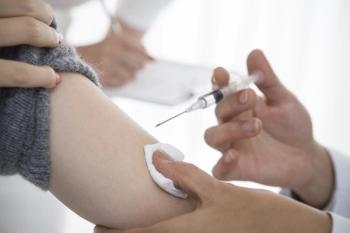
A single dose of Modified Vaccinia Ankara–Bavaria Nordic (MVA–BN), an attenuated smallpox vaccine, was highly effective against mpox in at-risk groups in England, a recent study showed.

The study, published in The Lancet Infectious Diseases, included 363 gay, bisexual, and other men who have sex with men diagnosed with mpox between July 4 and Oct. 9, 2022. Among those cases, eight were likely to have occurred at least 14 days after vaccination, 32 less than 14 days after vaccination and 322 were among unvaccinated participants.

Vaccine effectiveness was estimated at 78% (95% confidence interval, 54 to 89) at least 14 days after vaccination.

“A single MVA-BN dose was highly protective against symptomatic mpox disease among at-risk GBMSM, making it a useful tool for mpox outbreak control when rapid protection is needed,” the study authors, led by Marta Bertran, MSc, of the Immunizations and Vaccine Preventable Diseases Division, UK Health Security Agency, wrote. “For cases in which numbers at highest risk of infection exceed vaccine supply, there might be benefit in prioritizing delivery of first doses.”

An outbreak of mpox, previously called monkeypox, emerged in Europe in May. In July, the World Health Organization declared monkeypox a global health emergency. US Health Secretary Xavier Becerra declared a national public health emergency for the disease in August.

The study in England included participants aged 15 to 60 who completed electronic questionnaires. Vaccine uptake had reached 47% among eligible GBMSM in England by October 9 and 50% by the end of the study.

The study was consistent with prior research conducted in Israel, which found that a single dose of MVA-BN was 79% effective among at-risk GBMSM aged 18 to 42 years. A US study found that the incidence of mpox was 14 times greater among unvaccinated people who were eligible to receive MVA-BN than among those who received at least one dose of the vaccine.

“Our effectiveness results after one dose are also consistent with preclinical studies based on immunogenicity responses and animal models,” the authors wrote.

Participants younger than 50 had a slightly lower vaccine effectiveness than participants older than 50, who were more likely to have received smallpox vaccines during childhood.

“It is important to note that vaccine effectiveness might vary across the population,” the authors noted. “We have limited information on possible risk factors and clinical comorbidities.”

Among the eight breakthrough cases reported at least 14 days after vaccination, four were among people living with HIV.

“Because people living with HIV have been shown to have a higher risk of breakthrough COVID-19 infections post-vaccination, the identification of four of eight breakthrough mpox infections among people living with HIV by Marta Bertran and colleagues is noteworthy,” Dimie Ogoina of Niger Delta University in Nigeria and Nathalie Strub-Wourgaft of Drugs for Neglected Diseases Initiative in Switzerland, wrote in a related comment. “However, the MVA-BN vaccines have previously been shown to be immunogenic among adults with a history of AIDS and larger cohorts of people living with HIV will be required to ascertain if HIV is a risk factor for MVA-BN vaccine failure.”

The study supports the use of a single dose of MVA-BN to prevent symptomatic mpox before exposure rather than a post-exposure prophylaxis.



Related to this article

Pfizer 25-Valent Pneumococcal Vaccine Boosts Serotype 3 Response in Infants
Alejandra Gurtman, MD, discussed the phase 2 data at IDWeek 2026 which showed the investigational 25-valent pneumococcal conjugate vaccine 25vPnC produced serotype 3 antibody levels about 15-fold higher than Prevnar 20 after the booster dose, targeting a serotype still behind 10.6% of invasive pneumococcal disease in US children younger than five years.
FAQ: Ebola Prevention, Treatment and the Chances of a US Outbreak
As the Bundibugyo virus outbreak in the Democratic Republic of the Congo surpasses 9300 confirmed cases and 4400 deaths, this FAQ explains how the virus spreads, how it presents, why it is hard to diagnose and treat, which vaccines and therapies are being tested, and why CDC considers the risk to the United States low.
Measles Update: October 30, 2026
The latest CDC numbers show a 5.8% increase in measles cases from week-to-week, bringing the 2026 US total to more than double the amount seen in all of 2025 with 2 months left in the year.
Cefiderocol Continues to Show Activity Against Resistant Gram-Negative Infections
Shionogi data presented at IDWeek 2026 demonstrated a 76.7% clinical response with cefiderocol in carbapenem-resistant respiratory infections and high in vitro activity against resistant P aeruginosa VAP isolates. Christine Slover, PharmD, vice president, Infectious Diseases US Medical Affairs, Shionogi, offers insights on the data as well as clinical considerations for providers when weighing the antibiotic for patients.