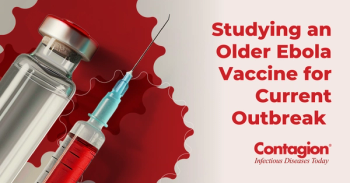
Investigators accessed longitudinal human data from ebola virus vaccination for signals of efficacy against the Bundibugyo species now surging in the Democratic Republic of Congo.
Development of the drug has been deemed necessary because of the potential for the use of the virus in a bioterrorism attack and waning herd immunity against the virus among the general population.
New study results on SIGA Technologies’ small molecule antiviral treatment for smallpox (tecovirimat, brand name TPOXX) indicate that the oral formulation is both safe for humans and efficacious in animals.
Although declared to be eradicated around the world in 1980, the virus that causes smallpox—variola virus—still exists. The existence of the virus along with the fact that administration of
According to the results of a new study, recently published in the NEJM, twice-daily dosing of 600 mg of tecovirimat was found to be safe in humans. Furthermore, following the Food and Drug Administration (FDA) “Animal Rule” interpreted for smallpox therapeutics by an expert advisory committee, the investigators on the study found that the minimum dose of tecovirimat needed to achieve over 90% survival in a monkeypox/nonhuman primate (NHP) model was 10 mg/kg for 14 days. A dose of 40 mg/kg for 14 days was found to be similarly efficacious in the rabbitpox/rabbit model. These results suggest that the conservative NHP model would be an appropriate model for estimation of human drug exposure.
A total of 851 human volunteers were screened for the safety trial. Of these volunteers, 452 were chosen to participate in the trial and subsequently randomized into 2 groups: 361 participants were assigned to receive 600 mg of tecovirimat twice-daily for 14 days, while the other 91 participants were assigned to receive a matching placebo twice daily for 14 days. According to the authors on the study, “the demographic and baseline characteristics of the trial participants were well balanced in the trial groups. A total of 431 participants completed the trial. The overall rate of adherence was 94.4% in the placebo group and 93.6% in the tecovirimat group; the corresponding rates among participants in the pharmacokinetic portion of the trial were 100% and 96.9%.” The majority of adverse events were deemed to be nonserious by the investigators. “Adverse events of grade 3 or higher occurred or worsened during treatment at a frequency of 1.1% in both the tecovirimat group and the placebo group and included headache, osteoarthritis, and hidradenitis,” study authors write.
Based on these findings, SIGA is continuing to move tecovirimat forward as a treatment for smallpox. “Smallpox is both highly contagious and highly lethal and there is growing concern that smallpox could be used as a potential bioweapon,” said Phil Gomez, PhD, SIGA’s Chief Executive Officer in a
Although the standard smallpox vaccine is still available, in the untimely event of an outbreak or bioterrorist attack, the investigators state that tecovirimat could be used as an “an important stopgap measure until the standard vaccine can be effectively deployed, while complementing the protective efficacy of the vaccine once it has been deployed.” The US government’s Biomedical Advanced Research and Development Authority (BARDA) funded the advanced development of oral tecovirimat in partnership with SIGA. Additionally, under Project Bioshield, SIGA has already delivered 2 million courses of oral tecovirimat to the Strategic National Stockpile.
FDA