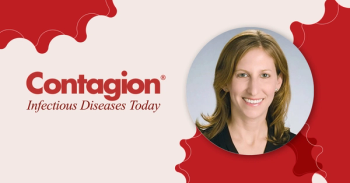
Lori Handy, MD, provides guidance in these areas including presentation before rash onset, when patients should be considered for the inpatient setting, and what treatment looks like.
With the news this week that childhood vaccine exemptions were at a historical high, it is important to understand what they are and how they are applied. Pediatrician Sharon Nachman, MD, offers some insights about the ability to forgo vaccines because of exemptions.
This week, the Centers for Disease Control and Prevention (CDC) released the latest
Although these increases in the exemption rates are incremental, the number of children exposed to vaccine-preventable diseases is in the thousands across the country. For example, the number of kindergartners exempt from 1 or more vaccines was approximately 155,000 during the 2025-2026 school year.2
“There's a question in my mind as to whether all these new rates of exemptions are, in fact, fact-based. Or is it that someone said, ‘Oh, my arm was tender, hot, and swollen; therefore, I cannot take not only that vaccine but any other vaccines from now on’?” said Sharon Nachman, MD, chief of the Division of Pediatric Infectious Disease at Stony Brook Children's Hospital. “So I think that part of the numbers is perhaps not based on true needs for exemptions. That's first. And the second is, I also wonder who's writing these exemptions. Are they people with a background on vaccines, [who] understand CDC guidance, which is quite clear about what warrants an exemption and what does not, vs ‘Oh, I'm just justifying writing an exemption because the family believes it so,’ and therefore that child does not get any further vaccines? As you can imagine, I'm quite worried about that rate of exemptions, because it tells us that those children are now not protected from those diseases.”
It is important to consider the background of exemptions, including the different types—medical, religious, and philosophical—and how they work.
Medical exemptions. All states provide medical exemptions for children whose health status makes vaccination unsafe.3 All 50 states, the District of Columbia, and Puerto Rico have regulations requiring proof of immunization as a condition for child care and school attendance, with medical exemptions available everywhere as an exception to that rule.4 Typically, a medical exemption must be written by an MD or DO, though some states allow other health care workers to certify that a vaccine would be detrimental to a patient's health.5
One valid reason for medical exemptions is in cases where adverse reactions happen and children should not be administered certain vaccines again.
“Children who have had anaphylaxis to a prior specific vaccine should never be given that vaccine again,” Nachman said. “There are very specific rules that are out there with regard to vaccine exemptions. So it can't be something like, ‘Oh, I had a stomachache; oh, I had some fever, my arm hurt,’ because those are routine traditional adverse effects from a vaccine and they are not the basis of any exemption. On the other hand, we've all had children who had a serious and significant untoward event from a vaccine, and that is part of what forms the rules for vaccine or further vaccination exemption.”
Religious exemptions. Currently, 29 states and Washington, DC, have a religious exemption law, and 17 states have both religious and philosophical exemption laws.6 This exemption is grounded in the First Amendment's protection of the right to freely hold and exercise religious beliefs, though it can be withdrawn if the state provides a compelling reason, such as preventing the spread of serious communicable disease.5 A small number of states have eliminated this exemption entirely.
Philosophical/personal belief exemptions. Sixteen states allow philosophical exemptions, making this the least commonly available category.7 This type of exemption must typically include all vaccinations rather than just one, and in some states, parents seeking it must do so in collaboration with an MD or other state-designated health care worker, sometimes with an additional education requirement.5
Overall, nonmedical exemptions are nearly ubiquitous, though some states explicitly exclude "philosophical" and "personal belief" exemptions and define these as falling outside the scope of religious exemptions.4 In 2025, the US Department of Health and Human Services sent a letter reinforcing that vaccine providers must respect state laws protecting religious and conscience-based exemptions to vaccine mandates, tied to compliance requirements for the Vaccines for Children Program.8 And this past week, the presidential executive order on the childhood vaccine schedule made explicitly clear the importance of
"The attorney general shall take appropriate measures to further meritorious legal actions challenging State laws that conflict with States' constitutional and Federal statutory obligations related to parental authority, religious freedom, disability accommodations, and equal protection under the law, including, to the extent applicable under Federal law, States' obligations to provide religious and medical exemptions from childhood and adolescent immunization requirements," the executive order reads.9
However, it is important to note that this could be challenged in court by states or individuals.
Nachman makes the point about protection not only for individual children but also the greater community—in schools, public gathering places, and in families’ homes—in addressing the potential consequences of not being vaccinated. “For every child not getting a vaccine, they are at risk themselves for getting that illness and they're also at risk for their community for bringing that illness to all the other children in their community,” she said.