News|Videos|April 23, 2025

Working to Prevent Malaria Through Genomic Research, Education

The Johns Hopkins Malaria Research Institute is hosting its World Malaria Day Symposium on Friday. Jane M. Carlton, PhD, offers some insights on the institute and its signature event.

The Johns Hopkins Malaria Research Institute was founded in 2001, and has a goal of creating a malaria-free world. The institute conducts discovery research around mosquito parasites at the Bloomberg School of Public Health in Baltimore, and field research at the Macha Research Trust in Zambia, as well as sites in sub-Saharan Africa, India, and other places where malaria is endemic.

“We have several world class insectaries where we grow different species of mosquito. We have world class parasite culture facilities where we grow the parasite, and we have state of the art molecular and cellular biology instrumentation, microscopes—and all sorts of key equipment in order for us to study the biology of the parasite,” said Jane Carlton, PhD, director of the John Hopkins Malaria Research Institute, and Bloomberg distinguished professor. “There are about 20 faculty or so working on all aspects of malaria in the institute, from understanding basic biology through to developing vaccines, drugs, and new diagnostics.”

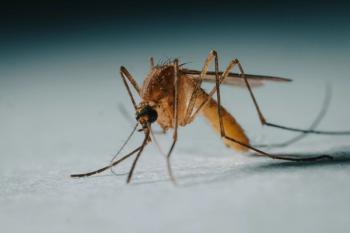
Carlton has her own lab, and a big part of her team’s research has been looking at trying to genetically modify mosquitos to prevent people from contracting malaria. Specifically, they have been researching different malaria parasite species, utilizing the latest in genomics.

“There's been a real revolution in genomic sequencing, and now it's much easier, faster, and cheaper to decode and to sequence the DNA of parasites,” Carlton said. “So genome sequencing enables us to identify, for the first time, every single gene in the genome of the parasite, and then to predict every protein, and to reconstruct the metabolic pathways of the parasites. This will enable us to find chinks in the armor of the parasites that could be developed into new drugs or new vaccines."

In additional to the institute’s work, Hopkins plays an educational role by hosting its World Malaria Day Symposium on Friday. The symposium will include speakers discussing the work around genetically modified mosquitos. The sessions run from 9am to 5pm and includes researchers from both the US and internationally. They will also have poster sessions during the day.

“This year, the theme is building better mosquitos, and we're bringing in a whole host of speakers to talk about how we can engineer mosquitos to either be sterile so they can't reproduce—populations of mosquitoes die out or are refractory to malaria parasite infection,” Carlton said. “And our range of speakers include genetic engineers, entomologists, and social scientists.”

The annual event has been ongoing for several years and it is free to everyone who attends. Although the event is now closed for registration, to learn more about the program, interested parties can go here.

“We roll out the symposium each year to really bring attention to the continued need for support of malaria research and control, and how it can lead us towards a malaria-free future,” Carlton said.

This is the first segment in a 2-part interview. Check back in on Friday for our World Malaria Day coverage. For the next installment of this interview, Carlton delves into more detail about parasitic genomic research and the institute’s work to try to eradicate malaria.


Related to this article

FAQ: What You Need to Know About West Nile Virus in 2026
After 2 adults died of West Nile virus in central North Carolina this month, this FAQ explains how the mosquito-borne virus spreads, who faces the greatest risk of severe neuroinvasive disease, and how clinicians can diagnose, manage, and help prevent infection when no vaccine or antiviral treatment exists.
Cefiderocol Continues to Show Activity Against Resistant Gram-Negative Infections
Shionogi data presented at IDWeek 2026 demonstrated a 76.7% clinical response with cefiderocol in carbapenem-resistant respiratory infections and high in vitro activity against resistant P aeruginosa VAP isolates. Christine Slover, PharmD, vice president, Infectious Diseases US Medical Affairs, Shionogi, offers insights on the data as well as clinical considerations for providers when weighing the antibiotic for patients.
FAQ: Shamonda Virus
As France confirms the first documented human Shamonda virus infection, a fatal encephalitis in a stem cell transplant recipient, this FAQ explains what the virus is, where it has spread, how the case was diagnosed, how the patient was likely infected and what clinicians should watch for.
ID Week Highlights Part 1
In this first IDWeek 2026 roundup, oral olorofim matched AmBisome in invasive aspergillosis, aztreonam-avibactam held activity as MBL-producing CRE rose, pritelivir cut hospitalizations in refractory HSV, and zelicapavir shortened RSV symptoms in high-risk adults.