





Sexually Transmitted Diseases
Latest News
Advertisement
Video Series






Latest Videos








Podcasts



















































































































































Advertisement
More News

Week 96 data from the LATA trial show Cabenuva was superior to daily oral therapy in adolescents with HIV, while new real-world OPERA cohort data reinforce comparable effectiveness in adults, both presented at AIDS 2026.

Several combination products are currently in development for people with HIV. Here is a review of these treatments.

A Rutgers Health study in Health Affairs found substantial growth in long-acting injectable buprenorphine prescriptions for opioid use disorder from 2021 to 2024, but with sharp state-level disparities driven by Medicaid policy differences, with fewer than 1% of buprenorphine prescribed as injectable in some states versus nearly 13% in others.
ViiV Healthcare's 2-drug Dovato regimen met its noninferiority end point against Gilead's 3-drug Biktarvy in the first head-to-head randomized trial comparing the 2 in treatment-naive adults with HIV.

A study in the American Journal of Physiology identifies retrotrapezoid nucleus (RTN) neurons as a critical and preserved circuit for counteracting opioid-induced respiratory depression, with optogenetic and chemogenetic stimulation of RTN neurons restoring breathing even during fentanyl administration.

Zoliflodacin has exhibited low cross-resistance with FQ-resistant and ceftriaxone- and azithromycinresistant in strains of N gonorrhoeae around the world. Here is a review of this recently approved antibiotic.

Phase 3 ISLEND-1 and ISLEND-2 trials showed once-weekly oral islatravir/lenacapavir was noninferior to daily BIKTARVY and standard of care ART in maintaining virologic suppression at Week 48, with no new safety concerns identified.

Merck has reached an agreement with the ADAP Crisis Task Force to help state AIDS Drug Assistance Programs provide doravirine/islatravir access to eligible, virologically suppressed people with HIV.

Four HIV Awareness Month conversations with Kristine Erlandson, MD; Joanne Stekler, MD, MPH; Oni Blackstock, MD, MHS; and Jason Baeten, MD, PhD, reveal what's holding back an epidemic we have the tools to end.

Jared Baeten, MD, PhD, discusses what the PURPOSE 1 and 2 trial data reveal about lenacapavir adherence, long-acting PrEP candidate selection, the treatment pipeline, and access barriers for twice-yearly injectable HIV prevention.

Oni Blackstock, MD, MHS, discusses why HIV prevention stalls despite breakthroughs: funding cuts, Medicaid gaps, and structural racism keep PrEP and care out of reach.

Joanne D. Stekler, MD, MPH, discusses why many Americans still miss HIV diagnosis—and how opt-out screening, rapid tests, self-tests, and same-day treatment close the gap.

A once-weekly oral HIV treatment combining islatravir and lenacapavir achieved its primary efficacy endpoint in 2 phase 3 trials, bringing the investigational regimen closer to becoming the first approved long-acting oral HIV therapy.

Why people with HIV age faster: Kristine Erlandson, MD, offers expert tips on frailty, HAND screening, statins post-REPRIEVE, and avoiding ART drug interactions.
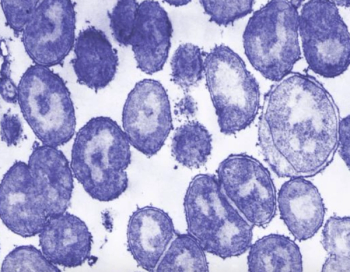
Effectiveness of post-exposure prophylaxis (PEP) with doxycycline for chlamydia and syphilis comes with increase in resistant gonorrhea.

A first-in-human HIV duoCAR-T shows encouraging safety in data presented at ASCGT, with early evidence of viral suppression for up to 2 years after stopping ART.

Gilead Sciences will receive FDA review for its investigational bictegravir/lenacapavir (BIC/LEN) single-tablet HIV regimen, with a decision expected by late summer.
The federal agency has given the nod to doravirine/islatravir (Idvynso), a once-daily, 2-drug HIV treatment that demonstrated noninferior efficacy to standard 3-drug regimens in phase 3 trials, expanding options for adults with virological suppression.

New research shows that antiretroviral therapy can reduce HIV-related accelerated biological aging by nearly 4 years, highlighting the critical importance of early and sustained treatment.

TAXIS Pharmaceuticals Chief Scientific Officer Ajit Parhi, PhD, offers some insights on the disease burden, and an overview of his company’s pipeline around developing a therapy for this STI.

A new bipartisan bill aims to eliminate cost barriers and expand access to PrEP by mandating comprehensive coverage and launching a national program for uninsured populations.

By launching during the Super Bowl pregame and the Grammy Awards, Gilead’s One2PrEP campaign used music, mainstream media, and bold visibility to normalize conversations about HIV prevention and expand awareness of evolving PrEP options.
In the final FY2026 spending bill, Congress rejected proposed House Republican cuts of more than $1.7 billion and instead maintained bipartisan funding for HIV prevention and treatment programs, while urging the Trump administration to focus on effective implementation.

The workgroup is examining the vaccine’s schedule including the age it is administered, dosage, and the safety and efficacy of the vaccines.

The partnership is a global collaboration to develop Debio1453, a first-in-class antibiotic targeting multidrug-resistant gonorrhea, aiming to strengthen the fragile antibiotic pipeline and ensure future treatment options.
Advertisement
Advertisement
Trending on Contagion Live
1
Ebola Update: DRC Outbreak Reaches 9735 Cases, Second Largest on Record
2
Early Dual Therapy Shortens Staphylococcus aureus Bacteremia in SABEDTIO Trial
3
Pritelivir Cuts Hospital Days in Refractory HSV in Phase 3 PRIOH-1
4
Pfizer 25-Valent Pneumococcal Vaccine Boosts Serotype 3 Response in Infants
5