|Videos|July 19, 2020

A Timeline to Heparin in COVID-19 Patients

Perspective on how the anticoagulant could progress to human trials and potentially, marketing use for coronavirus prevention.

Now that Rensselaer Polytechnic Institute (RPI) investigators have presented data showing the binding and potentially inhibitive nature of heparin on SARS-CoV-2 infection, it’s time to understand what the anticoagulant’s absolute effect is on the coronavirus.

Could it prevent coronavirus 2019 (COVID-19)? Or maybe it could serve as an early therapy in just-diagnosed patients?

In an interview with Contagion, RPI study author and professor Bob Linhardt, PhD, a glycoscientist, discussed the next steps of his team’s research into heparin.

Namely, he explained how that, given the US Food and Drug Administration (FDA) already permits the marketing of the blood thinner, it may stand to benefit from an expedited pathway if there’s proven COVID-19 benefit—much like remdesivir.

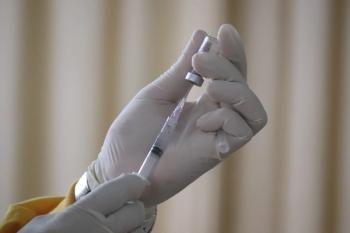
He also discussed the process of adapting the injectable drug to an inhalant, nebulizer dose—which is actually simpler than anticipated.

“There’s little bleeding risk here, and we’d only be exploring the antiviral activity of heparin by this route,” Linhardt said.

Much depends on the results from their ongoing animal model trial assessing nebulized, nasal-spray, and inhaled-dose heparin options in infected animals. But a human trial is very close.

“If we had a partner, we could do a nasal spray right away—because I think the safety would be viewed as little risk, and heparin is an already-approved drug, so it’d be like an off-label use,” he explained.


Related to this article

Measles Update: October 16, 2026
The latest CDC numbers show an 8.1% increase in measles cases from week-to-week, bringing the 2026 US total to 4410 confirmed cases. A CDC disease detective is going to Pennsylvania to aid in the state's massive outbreak, and the agency reports on a rare measles complication that is uniformly fatal.
NFID Survey Finds Respiratory Vaccine Gap Driven by Lack of Clarity, Not Hesitancy
The National Foundation for Infectious Diseases (NFID) recently held its respiratory season kick-off, which included the release of its annual respiratory disease survey. This year, the survey revealed the gap between vaccine support and uptake. Robert Hopkins Jr, MD, medical director of NFID delves deeper into the findings of the survey and the vaccine uptake challenges associated with certain immunizations.
Measles Update: October 9, 2026
The latest CDC numbers show a 5.0% increase of measles cases from week-to-week. The US total reached 4080 confirmed cases, 78% above all of 2025.
FAQ: What You Need to Know About Measles in 2026
With US measles cases nearing 3,900 this year and Pennsylvania reporting its fifth measles-related death, here is a review of how the virus spreads, how it is prevented and managed, and what severe disease looks like.