|Videos|August 10, 2020

PPE in the United States: What Went Wrong?

A breakdown of how COVID-19 infection was not managed well in hospitals and ICUs early on.

In a clinical sense, the burden of limited healthcare-based personal protective equipment (PPE) at the beginning of the US response to the coronavirus 2019 (COVID-19) drove the great disparity in healthcare worker infection rates still observed today.

In a metaphorical sense, the PPE shortage could represent the greater failures of the US healthcare system: well-known to be insufficient in a possible crisis, but never challenged to be changed until it was too late.

Just as new data reported in The Lancet Public Health last week states the predictable—that early COVID-19 healthcare workers with poor PPE reported a 30% greater likelihood of infection than their properly protected colleagues—the fallout from COVID-19 resource shortcomings has resulted in predictable backlash.

“I think the whole crisis and the speed of the pandemic really laid bare a lot of underlying problems I don’t think anyone truly ever acknowledged,” Andrew Chan, MD, MPH, said.

In an interview with Contagion, Chan—study author of the new Lancet study and professor of medicine at Massachusetts General Hospital and Harvard Medical School—discussed the observed “deep fragmentation” of the PPE supply chain in the US.

“The fact there wasn’t any nationalized, centralized approach to how PPE was going to be resourced across the country was really a major problem—especially when you’re dealing with large-scale health crisis,” Chan said.

While some regions were even overstocked with emergent healthcare materials, at-need hospitals and emergency units faced great shortages in necessary supplies early into COVID-19 spread.

Now, experts are seeking to improve a rumored issue the pandemic has made bare.

“I think this leads to people thinking hard about trying to understand the supply chain for PPE, also what are the rules and regulations that govern its dispersal and allocation,” Chan said.



Related to this article

Inhaled Amikacin Shows Low Resistance Rates in MAC Lung Disease in ENCORE
In the phase 3b ENCORE trial, adding amikacin liposome inhalation suspension (ALIS) to azithromycin and ethambutol significantly improved culture conversion in newly diagnosed MAC lung disease, while treatment-emergent amikacin (2.2%) and macrolide (1.1%) resistance stayed rare. Kevin Winthrop, MD, provides insights around the study.
Measles Update: October 16, 2026
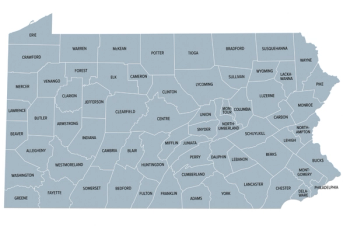
The latest CDC numbers show an 8.1% increase in measles cases from week-to-week, bringing the 2026 US total to 4410 confirmed cases. A CDC disease detective is going to Pennsylvania to aid in the state's massive outbreak, and the agency reports on a rare measles complication that is uniformly fatal.
NFID Survey Finds Respiratory Vaccine Gap Driven by Lack of Clarity, Not Hesitancy
The National Foundation for Infectious Diseases (NFID) recently held its respiratory season kick-off, which included the release of its annual respiratory disease survey. This year, the survey revealed the gap between vaccine support and uptake. Robert Hopkins Jr, MD, medical director of NFID delves deeper into the findings of the survey and the vaccine uptake challenges associated with certain immunizations.
Measles Update: October 9, 2026
The latest CDC numbers show a 5.0% increase of measles cases from week-to-week. The US total reached 4080 confirmed cases, 78% above all of 2025.