Among 2185 P aeruginosa isolates, 99.6% had cefiderocol-xeruborbactam MICs of 4 mg/L or lower (MIC50/90, ≤0.06/0.25 mg/L).2 Against carbapenemase producers, ceftolozane-tazobactam, imipenem-relebactam, meropenem-vaborbactam, and ceftazidime-avibactam showed 2.4% to 4.8% susceptibility, compared with 76.2% for cefiderocol. Cefiderocol-xeruborbactam inhibited 92.9% to 99.2% of resistant subsets, including XDR and ceftolozane-tazobactam-nonsusceptible isolates.2
Carbapenemase-positive P aeruginosa came mostly from Europe, with a single carbapenemase producer identified among US isolates.2 European isolates were less susceptible than US isolates to cefiderocol-xeruborbactam, cefiderocol, and ceftazidime-avibactam, but more susceptible to ceftolozane-tazobactam, imipenem-relebactam, and meropenem-vaborbactam.2
Frequently Asked Questions
What is cefiderocol-xeruborbactam?
It is an investigational combination of cefiderocol, a siderophore-conjugated cephalosporin, and xeruborbactam, a β-lactamase inhibitor active against serine and metallo-β-lactamases.1,4
How active was cefiderocol-xeruborbactam against carbapenem-resistant Acinetobacter?
The combination inhibited 98.5% of carbapenem-nonsusceptible A baumannii-calcoaceticus isolates collected in 2024, including 93.1% of NDM producers.3
Does xeruborbactam add to cefiderocol activity in vivo?
In a mouse urinary tract infection model, the combination reduced bacterial counts by more than 1 log10 against 4 isolates where cefiderocol alone did not.4
Activity Against Carbapenem-Resistant Acinetobacter and Mouse UTI Model Results
Of 1307 A baumannii-calcoaceticus isolates from 93 medical centers in 20 countries, 41.2% were carbapenem nonsusceptible, with higher rates in Europe (50.5%) than North America (28.8%).3 Cefiderocol-xeruborbactam inhibited 98.5% of carbapenem-nonsusceptible isolates, compared with 0.2% for meropenem and 92.8% for colistin. Activity reached 98.9% against OXA-23-like producers and 93.1% against NDM producers.3
Xeruborbactam restored cefiderocol activity against PER-producing isolates, inhibiting 100% vs 4.8% with cefiderocol alone.3 The combination also inhibited 84.0% of cefiderocol-nonsusceptible and 90.2% of sulbactam-durlobactam-nonsusceptible isolates. Against sequence type 2, which accounted for 69.7% of carbapenem-nonsusceptible isolates, cefiderocol-xeruborbactam inhibited 98.7% vs 87.7% for cefiderocol and 92.8% for sulbactam-durlobactam.3
Nonsusceptibility to cefiderocol (5.7%) and sulbactam-durlobactam (3.9%) was far less common than carbapenem nonsusceptibility.3 Only 23 isolates (1.8%) had cefiderocol-xeruborbactam MICs above 4 mg/L.3
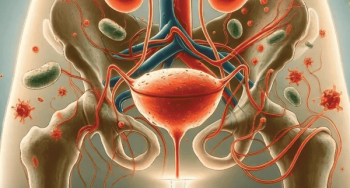
In the mouse model, investigators infected neutropenic mice with 4 Enterobacterales isolates with cefiderocol MICs of 4 mg/L or higher, including an NDM producer.4 Adding xeruborbactam lowered cefiderocol MICs against all 4 isolates in vitro, and bacterial burdens in untreated controls rose by about 2 to 3 log10 colony-forming units per kidney.4
Cefiderocol alone, given at a humanized regimen, did not achieve a reduction of more than 1 log10 in kidney bacterial counts, and xeruborbactam alone showed no efficacy.4 The combination produced more than a 1-log10 reduction against all 4 strains.4
For the combination, MICs in the mouse model study were also determined in cation-adjusted Mueller-Hinton broth, consistent with the susceptibility testing methodology approved by CLSI and EUCAST in 2026.4
References
Papp-Wallace KM, Kimbrough JH, Maher JM, Mendes RE, Sader HS, Castanheira M. Activity of cefiderocol-xeruborbactam and comparator agents against Enterobacterales, including molecularly characterized isolates recovered globally in 2024. Presented at: IDWeek 2026; October 21-24, 2026; Washington, DC. Poster P-166.
Papp-Wallace KM, Kimbrough JH, Maher JM, Mendes RE, Sader HS, Castanheira M. Activity of cefiderocol-xeruborbactam and comparator agents against Pseudomonas aeruginosa, including molecularly characterized isolates recovered globally in 2024. Presented at: IDWeek 2026; October 21-24, 2026; Washington, DC. Poster P-168.
Kimbrough JH, Papp-Wallace KM, Castanheira M. Activity of cefiderocol-xeruborbactam and comparator agents against global Acinetobacter baumannii-calcoaceticus species complex isolates. Presented at: IDWeek 2026; October 21-24, 2026; Washington, DC. Poster P-167.
Mizusawa E, Toba S, Takagi F, et al. Bactericidal activity of cefiderocol/xeruborbactam in a murine urinary tract infection model. Presented at: IDWeek 2026; October 21-24, 2026; Washington, DC. Poster P-163.