|Videos|September 4, 2020

The Older Pediatric COVID-19 Problem

At a time when schools and college campuses have reopened, an expert discusses adolescents' trends in spreading COVID-19 more easily, and the lack of testing available to them.

An asymptomatic pediatric coronavirus 2019 (COVID-19) rate of just 1% is enough to assure that modern testing protocol could never practically resolve the spread of undetectable cases.

But that doesn’t make the current US COVID-19 testing strategy any more appropriate.

In the final segment of an interview with Contagion®, Dylan K. Chan, MD, of the University of California San Francisco (UCSF) Division of Pediatric Otolaryngology, Department of Otolaryngology—Head and Neck Surgery, shared perspective on what his team’s Pediatric COVID-19 Risk Assessment Tool means for younger patient spread in the coming months.

As he explained, small prevalence rates from 1-3% create an inevitability of “super spread” events in classrooms, get-togethers, and other gatherings.

“I don’t think it’s a surprise at all, knowing what we know about these numbers,” he said.

Chan also explained what these findings, coupled with national guidance to refrain from asymptomatic-risk testing due to limited resources, spell for future management of COVID-19.

He’s in agreement that, in current circumstances of testing scarcity, greater-risk persons need to be prioritized—and that puts children at the end of the line.

“That’s not an ideal situation, and we’re never going to get things under control as long as we’re in that situation,” he said.


Related to this article

Measles Update: October 16, 2026
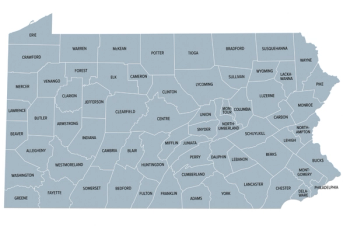
The latest CDC numbers show an 8.1% increase in measles cases from week-to-week, bringing the 2026 US total to 4410 confirmed cases. A CDC disease detective is going to Pennsylvania to aid in the state's massive outbreak, and the agency reports on a rare measles complication that is uniformly fatal.
NFID Survey Finds Respiratory Vaccine Gap Driven by Lack of Clarity, Not Hesitancy
The National Foundation for Infectious Diseases (NFID) recently held its respiratory season kick-off, which included the release of its annual respiratory disease survey. This year, the survey revealed the gap between vaccine support and uptake. Robert Hopkins Jr, MD, medical director of NFID delves deeper into the findings of the survey and the vaccine uptake challenges associated with certain immunizations.
Measles Update: October 9, 2026
The latest CDC numbers show a 5.0% increase of measles cases from week-to-week. The US total reached 4080 confirmed cases, 78% above all of 2025.
FAQ: What You Need to Know About Measles in 2026
With US measles cases nearing 3,900 this year and Pennsylvania reporting its fifth measles-related death, here is a review of how the virus spreads, how it is prevented and managed, and what severe disease looks like.