

Zandraetta Tims-Cook, MD, MPH, highlights the need for inclusive HIV prevention strategies and discusses the potential of long-acting injectable PrEP in improving care and reducing disparities.
Zandraetta Tims-Cook, MD, MPH, highlights the need for inclusive HIV prevention strategies and discusses the potential of long-acting injectable PrEP in improving care and reducing disparities.

Robert Hopkins Jr, MD, the medical director of the National Foundation for Infectious Diseases discusses the results of the organization's new survey and the surprising findings that many people forget to wash their hands after key times or believe it is not needed.

As therapies that impact the immune system become more common, patients are living longer but with increased susceptibility to infections, including viral, bacterial, fungal, and emerging diseases.

Therapeutic vaccines GS-2829 and GS-6779 demonstrate immune responses and strong safety profile, showing potential to contribute to global hepatitis B elimination efforts.

Pertussis, also known as whooping cough, saw more cases last year than in the last decade, and it is on track for another record year for cases. Sharon Nachman, MD, provides clinical insights for presentation, treatment, and vaccination.
Multinational real-world analysis underscores the effectiveness of sofosbuvir/velpatasvir (SOF/VEL) across diverse populations and highlights the need for timely treatment initiation to improve patient outcomes.

Paul Feuerstadt, MD, discusses the safe and effective use of RBL in preventing C difficile recurrence with positive physician feedback and high patient benefit

Anu Osinusi, MD, discusses the findings examining bulevirtide as a standalone therapy and in combination with pegylated interferon alpha.

Paul Offit, MD, offers insights on the state of measles today where some families are opting to believe treatment is a better option than vaccination. He also discusses the potential toxicity of vitamin A treatment, as well as the limitations of supportive treatment for the disease.

Jason Barker, ND, explains how in-house technology delivers highly sensitive specific and early detection of Borrelia infections and co-infections helping patients receive faster diagnosis and treatment
Jason Barker, ND, details how Vibrant’s platform raises diagnostic sensitivity from 63% to 100%, ensuring more accurate detection and faster treatment for Lyme disease and tick-borne infections.

Andrew Lover, PhD, MPH, discusses the shifting landscape of tick-borne illnesses during Tick-Borne Disease Awareness Month.

Jason Barker, ND, explains how standard testing can miss coinfections and how Vibrant’s microarray improves sensitivity and efficiency in a single test.
Sabrina Absalon, PhD, explains how antibiotic disruption of the apicoplast led to the discovery of PfAnchor, a key protein required for parasite division and survival.
Novavax Vice President Matthew Rousculp on reactogenicity, vaccine hesitancy, and supporting informed decisions.

Matthew Hepburn, MD, offers some insights on his time as vaccine development lead for Operation Warp Speed and the ability to develop a COVID-19 vaccine within a year.
At ESCMID Global 2025, SHIELD study data show Novavax recipients experienced fewer adverse effects and missed less work compared with those who received the Pfizer-BioNTech COVID-19 vaccine.
Sabrina Absalon, PhD, on how disrupting apicoplast division can stop malaria in its tracks and calls for sustained research funding to combat the disease.

Insights from Andrew Lover, PhD, MPH, MS, on challenges in rural Southeast Asia, border malaria, and new mosquito vectors impacting global efforts.
In the first part of our interview, Sabrina Absalon, PhD, explains how depleting a protein linked to apicoplast division leads to rapid death of Plasmodium falciparum.

Scynexis developed its investigational fungal compound, SCY-247, which is in phase 1 clinical trials, and the company expects to share top-line data this year.

Sarah Rowan, MD, on minimal laboratory testing, Hepatitis B screening flexibility, peer navigation, and state‑specific strategies to overcome outreach and reimbursement hurdles

Sarah Rowan, MD, says tailored models within syringe service programs can overcome barriers and improve cure rates in underserved populations.
Matthew Hepburn, MD, executive vice president of research and development at Panther Life Sciences, discusses the technology and its potential usage.

Sharmeen Roy, PharmD, BCPS, on artificial intelligence (AI) in improving decision-making, reducing adverse drug events on National Adverse Drug Event Awareness Day, and upcoming research on pediatric dosing at the the Congress of the European Society of Clinical Microbiology and Infectious Diseases.
Andrew Aronsohn, MD, associate professor of Medicine, University of Chicago Medical Center, discusses the hepatitis C (HCV) screen and treat plan that looks to utilize a one visit approach to get people tested and on medication in the same patient encounter.

Sharmeen Roy, PharmD, BCPS, discusses the role of AI, real-world evidence, and clinician oversight in optimizing medication dosing for ICU patients.
Sharmeen Roy, PharmD, BCPS, discusses the role of Bayesian dosing, therapeutic drug monitoring, and hospital resource allocation.
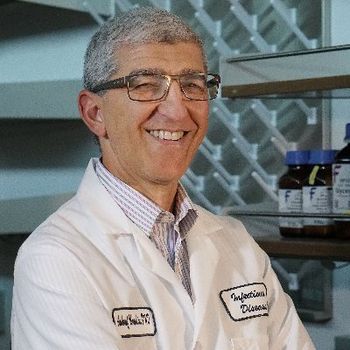
Ashraf S. Ibrahim, PhD, outlines safety studies and the potential of this antibody therapy for treating this rare fungal infection, which is seemingly becoming less rare.
Ashraf S. Ibrahim, PhD, details over 20 years of research on a spore-coating protein and the development of VX-01 to block fungal tissue invasion.