Related Articles
Here are some of the articles Prinzi referenced during her conversation:
JAMA article
In the latest From Pathogen to Infectious Disease Diagnosis podcast, Andrea Prinzi, PhD, MPH, SM(ASCP), talks about diagnostic stewardship and that when it is grounded in collaboration, education, and thoughtful test use, it can improve patient care while helping clinicians navigate increasingly complex diagnostic tools.
This is the latest episode of our From Pathogen to Infectious Disease Diagnosis podcast, where we discuss the relationship between clinicians and laboratory professionals.
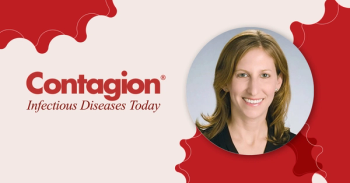
Diagnostic stewardship has become a central concept in infectious diseases and clinical microbiology, yet its purpose is often misunderstood. In a recent podcast, clinical microbiologist Andrea Prinzi, PhD, MPH, SM(ASCP), director of scientists in global medical affairs at bioMérieux, provided some insights into what diagnostic stewardship truly means and why it is essential to modern health care.
At its core, diagnostic stewardship is about ensuring that testing is both appropriate and actionable. “The core mission of diagnostic stewardship is to perform the right test in the right patient at the right time,” Prinzi said. She emphasized that stewardship is not about limiting testing for its own sake but rather about ensuring diagnostic tools are used in ways that meaningfully inform clinical decision-making and improve patient outcomes.
This distinction is especially important as newer diagnostic technologies become faster and more sensitive. Although these tests provide unprecedented amounts of information, Prinzi cautioned that their misuse can unintentionally lead to downstream consequences, including unnecessary antimicrobial use.
“What it really is, is trying to ensure that the tests that we're using are the best test for the patient and that it gives us actionable information that allows us to improve patient care,” Prinzi said. The discussion also highlighted the longstanding role of clinical laboratories in stewardship. Although the terminology is relatively new, laboratories have practiced diagnostic stewardship for decades through specimen screening, test cancellation, and result interpretation. When laboratories reject poor-quality specimens, Prinzi explained, they are protecting patients from misleading or low-value results—a form of stewardship that has always been part of clinical microbiology practice.
Here are some of the articles Prinzi referenced during her conversation:
JAMA article
Drawing on her experience as a clinical microbiologist and her doctoral research on pneumonia diagnostics, Prinzi described how testing decisions influence treatment behavior. Her work has shown that even the act of collecting a respiratory culture can be associated with increased antimicrobial use, regardless of whether the organism identified is a true pathogen. These findings underscore the importance of thoughtful test selection and clear guidance on how results should be interpreted.
The conversation also addressed challenges that clinicians face, including overestimating pretest probability and failing to sufficiently adjust management after receiving diagnostic results. Although improved diagnostics can help reduce uncertainty, both speakers emphasized that education, communication, and collaboration across care teams are critical to translating results into appropriate clinical action.
Despite the complexity of implementing diagnostic stewardship, Prinzi stressed that meaningful progress does not require sweeping systemwide changes. Small, targeted interventions—such as modifying laboratory reports or introducing subtle clinical nudges—can significantly influence prescribing behavior. Sharing these efforts through publications, presentations, and podcasts helps other institutions identify practical starting points.
Ultimately, diagnostic stewardship is about optimizing diagnostic tools to support better care and developing relationships around different specialties within the institution.
“You can't do stewardship—either diagnostic or antimicrobial stewardship—well without having really strong relationships between the laboratory and the stewardship team and your infection preventionist and maybe operations administrators, things like that, so building relationships across your facility is super important,” Prinzi.