Investigators accessed longitudinal human data from ebola virus vaccination for signals of efficacy against the Bundibugyo species now surging in the Democratic Republic of Congo.
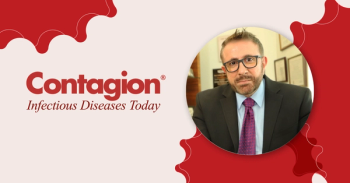
Emory's Gavin Harris, MD, talks about taking care of patients with high-consequence infectious diseases, and considerations for not only their care, but their families. He also discusses working with other healthcare facilities around COVID-19 care and educating them through Emory's ECHO program on new and existing threats.
We are continuing our new series, Media Day, where we spotlight individual medical institutions and their infectious disease (ID) programs. This episode profiles Emory Healthcare.
When people think of Ebola or other diseases or viruses that are considered high-consequence infectious diseases (HCID) they often think of movie scenarios where clinicians are completely covered in personal protective equipment and wearing face masks with ventilators to keep themselves protected from airborne viruses, and it happening in countries outside the US.
Emory Healthcare brought in patients with Ebola virus disease to treat at their facilities in 2014, becoming the first US hospital institution to do so. At a time when little was known about caring for these patients, the university's Serious Communicable Diseases Unit (SCDU) successfully treated these patients, and in turn, created protocols of care that are now the standard when caring for patients with deadly infections.1
And when there has been Ebola outbreaks in the Democratic Republic of Congo, Emory has sent teams of researchers and infectious disease experts to help with clinical care, but also learn from those on the ground working in those HCID environments.1 Their team is answering the call whether in a hot spot area internationally, or when HCID happens here in the US.
Although this particular disease typically is very rarely brought into the country via travelers, the COVID-19 pandemic is a reminder HCID can truly happen anywhere. The pandemic motivated Gavin Harris, MD, and his Emory colleagues to begin SCDU’s
Harris is associate medical director, Serious Communicable Diseases Program (SCDP), Emory University, and director of Education and Outreach for the program and had experience working in hot zone environments where HCID outbreaks were happening. ECHO seemed a natural evolution as the pandemic took hold in the US.
“When we started, and the intent of that was to amplify and disseminate best medical practices to hospitals throughout our southeast region, here in the United States; but what we quickly learned, and I think this is an important lesson to think about, is that we listen to our audiences, because some of the conditions and challenges that we experienced here at Emory in Atlanta were very different than what rural hospitals or other frontline facilities were experiencing,” said Harris.
For smaller, rural hospitals, Harris points out they did not have enough staff or resources to adequately care for patients with COVID. After listening to the feedback from the other facilities, they worked on better communication and utilize electronic communication tools such as Teams and Zoom to hold their ECHO training webinars for various specialties.
Harris also points out for patients with HCID, a big consideration is that for individuals who are battling these serious health ailments, they are often hospitalized for long periods of time and their recovery post-discharge, can also take time so support and resources are needed for these patients and their families. And on the institution side, he says a comprehensive approach is needed with various medical stakeholders getting involved.
“We tried to engage our ancillary or auxiliary services so folks that normally may not be at the forefront of clinical care or at the patient's bedside, like nurses or clinicians, but others. "We tried to engage our laboratorians; we tried to engage administrative personnel, and so we learned, again, from feedback that the care of patients for high consequence infectious diseases or that preparedness at large, has to encompass the whole of organizations from the ground up, and then also from the top down.”
In the next episode, Harris discusses his work in hot zones and treating high-consequence infectious diseases.