The Disease’s Effect
One of the ongoing issues with malaria as it relates to the blood supply, is that a large number of possible donors are excluded from giving blood because of travel to or from residences in malaria-endemic areas. According to the World Health Organization (WHO), in 2022, nearly half of the world's population was at risk of malaria. While sub-Saharan Africa carries a disproportionately high share of the global malaria burden, the WHO regions of Southeast Asia, the Eastern Mediterranean, the Western Pacific, and the Americas also report significant numbers of cases.2
It still has one of the highest mortality rates worldwide.There were an estimated 249 million cases of malaria in 2022, and the estimated number of malaria deaths stood at 608,000.2
Although malaria is a rare occurrence in the United States, last year, there were 9 cases of locally acquired malaria in Texas and Florida in people who had no international travel histories.3 This was the first time in 20 years.3 Typically, Americans will acquire malaria overseas, and many experts believe warming temperatures could increase caseloads of the vector-borne disease for years to come.
The Test
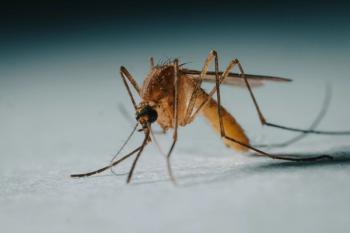
Malaria is transmitted via the bite of a female anopheline mosquito that is infected with one of the 5 types of parasites related to the Plasmodium species. Cobas is a qualitative in vitro nucleic acid screening test, which allows for direct detection of Plasmodium RNA and DNA in whole blood samples from individual human donors.The test, which can be performed with other routine blood donor screening tests, is designed for use on the cobas 6800/8800 Systems in the US.
The test is not intended for use to diagnose Plasmodium infection, for use on cord blood samples or for use on cadaveric blood specimens. The test utilizes the Roche Whole Blood Collection Tube, which allows for direct draw from the donor and is loaded directly onto the cobas 6800/8800 Systems for increased workflow efficiency.1
The company says it expects the test will be available in the United States at the end of Q2 2024, and that approval in CE-marked countries is anticipated later this year.
References
1. Roche receives FDA approval for the first molecular test to screen for malaria in blood donors. Global Newswire. March 26, 2024. Accessed March 26, 2024.
https://www.globenewswire.com/news-release/2024/03/26/2852619/0/en/Roche-receives-FDA-approval-for-the-first-molecular-test-to-screen-for-malaria-in-blood-donors.html
2. Malaria. World Health Organization. Accessed March 26, 2024. https://www.who.int/health-topics/malaria#tab=tab_1
3.Cosdon N. For the First Time in 20 Years, US Reports 7 Locally Acquired Malaria Case. Contagion. July 10, 2023. Accessed March 26, 2024.
https://www.contagionlive.com/view/for-the-first-time-in-20-years-us-reports-7-locally-acquired-malaria-cases