|Videos|November 25, 2016

How Are Antibiotic Stewardship Programs Impacting Antibiotic Resistance?

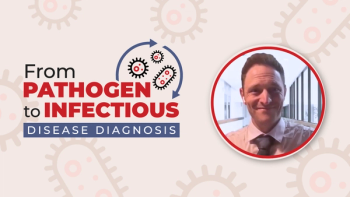
Lauri A. Hicks, DO, captain, US Public Health Service, director, Office of Antibiotic Stewardship, medical director, Get Smart: Know When Antibiotics Work, Division of Healthcare Quality Promotion, Centers for Disease Control and Prevention, discusses how antibiotic stewardship programs are impacting antibiotic resistance.

Lauri A. Hicks, DO, captain, US Public Health Service, director, Office of Antibiotic Stewardship, medical director, Get Smart: Know When Antibiotics Work, Division of Healthcare Quality Promotion, Centers for Disease Control and Prevention, discusses how antibiotic stewardship programs are impacting antibiotic resistance.

Interview Transcript (slightly modified for readability)

“I think it is going to be very difficult to predict, at this point, what the impact might be on antibiotic resistance, but I think we can stay united around this mission of improving antibiotic use because this is a problem that is not going away, and we know that we need to continue to improve how antibiotics are being used in order to preserve their effectiveness.

What we know is that there is a lot of engagement both at the federal levels as well as at the local level. We have a lot of health systems that have committed to improving how antibiotics are being used within their own health systems. We’re working very closely with organizations like The Joint Commission, [which] is actually [implementing] a new requirement that will make sure that all hospitals will have antibiotic stewardship programs; it’s going to be a standard that incorporates antibiotic stewardship as one of their requirements.

Going forward, there is no doubt that addressing the problem of antibiotic resistance is going to be an ongoing priority. From that perspective, we want to keep sending the message that we want every single healthcare facility to have an antibiotic stewardship program. When I say healthcare facility I mean hospitals, [and] ideally nursing homes, as well.

In outpatient facilities we want to make sure that every single provider, whether you’re a nurse, you’re a doctor, you’re a nurse practitioner, you’re a physician assistant, is really thinking about how they can make an impact on this problem, and prescribe antibiotics appropriately.”

Related to this article

This Week's Top 5 Infectious Disease News Stories: September 12-September 18, 2026
In this week's top infectious disease stories, a Pennsylvania teen became the state's fourth measles death in weeks, the CDC reported a 17% summer surge in rabies exposure calls, new research revisited whether cefepime raises mortality risk, a multihospital review examined ceftriaxone's safety after state alerts, and examining Legionella pneumonia diagnostics.
Ceftriaxone Safety: Separating Signal From Risk
A retrospective multihospital study found that severe adverse events occurred at similarly low rates with ceftriaxone and other IV cephalosporins suggesting there is no evidence to support avoiding ceftriaxone despite recent health department safety alerts.
Treatment of Latent Tuberculosis in a Trice
A retrospective study of 225 patients across Cook County Department of Health clinics found that the novel 1-month 1HP regimen (isoniazid plus rifapentine) for latent TB infection had a completion rate comparable to standard longer regimens and was well tolerated, suggesting it may be a viable shorter alternative.
Peggy Lillis Foundation Will Honor C diff Advocates at Annual Gala
The Peggy Lillis Foundation will host its 17th Annual Changing the Odds Gala this month in New York City, and it will include a casino, fellowship amongst the C diff community, and an award ceremony honoring a physician-scientist, philanthropist, a researcher, and a patient advocate for their contributions to C difficile awareness, treatment, and prevention.