Peptilogics announced the enrollment of the first patient in the phase 2/3 RETAIN registration trial evaluating PLG0206, a first-in-class anti-biofilm drug candidate designed to treat prosthetic joint infections (PJI).
Approximately five million joint replacements are performed annually across the United States, the United Kingdom, and Europe, and about 2% of those procedures result in prosthetic joint infections, which is a major complication and a leading form of medical device-related infection (MDRI). These infections are driven largely by bacterial biofilm that forms on implanted devices, creating a protective matrix that shields bacteria from antibiotics and immune defenses. As a result, infections can persist and recur even years after surgery.
Current treatment for PJI typically involves a two-stage revision procedure in which the infected implant is removed and replaced after a course of treatment. This approach carries a 15–25% failure rate, often requires multiple surgeries, and is associated with a five-year mortality rate of about 25%. In the U.S. alone, the economic burden of PJI is estimated at roughly $20 billion annually.
“RETAIN is a landmark trial that will determine whether PLG0206 can provide surgeons a proven, durable cure for prosthetic joint infection,” Javad Parvizi, MD, FRCS, professor of orthopedic surgery at Acibadem University and past president of the American Association of Hip and Knee Surgeons, said in a statement. “Total joint arthroplasty is very successful in restoring function, mobility, and quality of life, but infection after joint replacement is a truly devastating complication that robs patients of that outcome and, in far too many cases, their lives. I’m excited about the promise of PLG0206 as a first-in-class treatment for patients with PJI, and as a potential solution for all medical device-related infections in the future.”
The study is a randomized, double-blind, placebo-controlled, multi-center phase 2/3 registration trial evaluating PLG0206 in patients undergoing DAIR (Debridement, Antibiotics, and Implant Retention) surgery following total knee arthroplasty. The study will enroll up to 240 patients across as many as 50 clinical sites. Its primary endpoint is treatment failure at 12 months, with a key secondary endpoint measuring PJI-related surgical intervention within the same timeframe.
The trial builds on earlier clinical work, including a phase 1 study establishing PLG0206’s safety and a Phase 1B study in patients with PJI showing promising preliminary efficacy. In that trial, only one of thirteen patients treated with PLG0206 experienced a recurrence of infection within 12 months, corresponding to a 7% failure rate. By comparison, published data suggest current standard-of-care treatments can have failure rates between 35% and 55% at one year.
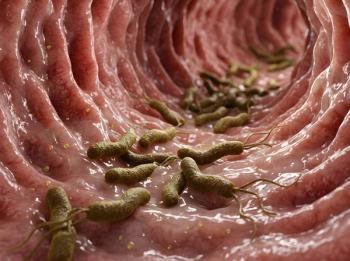
Peptilogics says the therapy was specifically engineered to penetrate biofilm and eliminate persister bacteria that evade conventional treatments.
What You Need to Know
Peptilogics has initiated the Phase 2/3 RETAIN trial evaluating PLG0206 in patients undergoing surgery for prosthetic joint infections following knee replacement.
PLG0206 is designed to penetrate bacterial biofilms—structures that protect infection-causing bacteria and drive treatment failure in device-related infections.
If successful, the therapy could expand beyond joint infections to address a wide range of medical device-related infections affecting millions of patients worldwide.
“Biofilm is the root cause of medical device-related infections, and no approved therapy has ever been designed to target it,” Peptilogics CEO Jonathan Steckbeck, PhD, said in a statement. “We built PLG0206 from the ground up as the first drug to penetrate biofilm and eradicate the persister bacteria protected by it. PJI is our first indication because it is the largest and most acute unmet need, but the biofilm biology is identical across all device categories. If we are successful in RETAIN, we will have demonstrated a platform with the potential to cure and prevent infections wherever a medical device is implanted – a multi-billion dollar category-defining therapeutic.”
The company estimates that about 55 million people in the United States live with implanted medical devices, including joint replacements, cardiovascular assist devices, spinal hardware, trauma fixation systems, vascular grafts, and other implants. Across these categories, bacterial biofilm remains a primary driver of serious infections, with no approved therapies specifically designed to eliminate it.
PLG0206 is active against a broad range of bacteria, including multidrug-resistant pathogens, and is designed to integrate into existing surgical workflows. The investigational therapy has received Qualified Infectious Disease Product (QIDP) designation, as well as Orphan Drug and Fast Track designations from the FDA for the treatment of prosthetic joint infections.