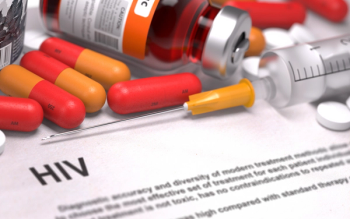
The guidelines issued by the Department of Health and Human Services (HHS) have been updated with recent, evidence-based consensus of The Panel for the Use of Antiretroviral Agents in Adults and Adolescents.
A newly proposed federal insurance rule for 2027 omits long-promised protections on co-pay assistance, allowing insurers and pharmacy benefit managers to continue diverting billions of dollars intended to help patients afford prescription drugs.
As patients across the United States struggle with rising prescription drug costs, the Trump administration is facing criticism for failing to include key affordability reforms in its newly released 2027 Notice of Benefit and Payment Parameters (NBPP) proposed rule. Advocates say the omission allows insurers and pharmacy benefit managers (PBMs) to continue profiting from manufacturer co-pay assistance—money designed to help patients meet their out-of-pocket costs.
The proposed rule does not address whether co-pay assistance provided by drug manufacturers must count toward a patient’s deductible or other cost-sharing requirements. This issue has been a flash point for years, as insurers and PBMs increasingly use co-pay accumulator programs that prevent this assistance from counting toward patients’ out-of-pocket limits.
“Every day this rule is delayed is another day that insurers and PBMs are pocketing billions of dollars meant for patients who are struggling to afford their drugs,” Carl Schmid, executive director of the HIV+Hepatitis Policy Institute, said in a statement. Although Schmid acknowledged the administration’s stated focus on drug affordability, he urged swift action to close what advocates see as a glaring loophole.
The controversy dates back nearly 2.5 years, when a federal court struck down a prior government rule that allowed insurers to decide whether co-pay assistance would count toward patient cost sharing. The court clarified that an earlier 2020 NBPP rule—requiring co-pay assistance to count, except for brand-name drugs with a generic equivalent—remains in effect. Despite this, the federal government has said it will not enforce that standard until new regulations are issued, leaving patients in limbo.
Advocates are also concerned that the proposed 2027 rule fails to clarify that drugs covered by large group and self-funded health plans should be treated as essential health benefits. Some employers, working with PBMs and third-party vendors, classify drugs that come with manufacturer assistance as nonessential, even when they are covered. Because essential health benefits are subject to cost-sharing limits, this practice allows plans to capture co-pay assistance for themselves without crediting it to patients.
What social media platform do you use the most?
The government closed this loophole for individual and small group plans in the 2025 NBPP rule and indicated it would extend the fix to large group and self-funded plans in the future. That promise, advocates say, has yet to be fulfilled.
The financial stakes are high. Deductibles and cost sharing continue to rise, with the annual maximum out-of-pocket limit for 2027 set to increase by 13% to $12,000 for individuals and $24,000 for families. According to IQVIA, drug manufacturers provided $21.4 billion in co-pay assistance to patients in 2024—but insurers and PBMs retained $7 billion, or 37%, of that total.
For patients and advocates, the message is clear: Without prompt regulatory action, billions of dollars meant to ease the burden of prescription drug costs will continue to bypass the people who need them most.